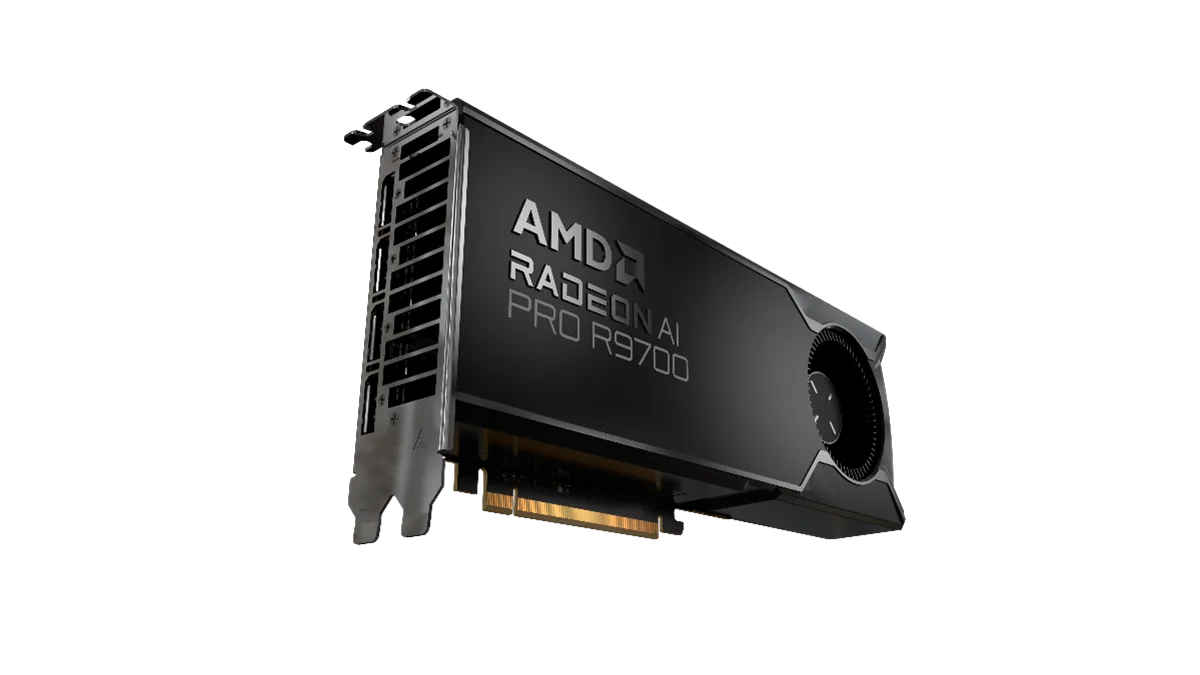
- Radeon AI PRO32 GB · runs 30–34B models at 4-bit
Full specifications
- GPU
- AMD RDNA 4 (Navi 48)
- Compute units
- 64
- AI accelerators
- 128
- Memory
- 32 GB GDDR6, 20 Gbps
- Memory interface
- 256-bit, 640 GB/s
- Boost clock
- Up to 2,920 MHz (game clock up to 2,350 MHz)
- Interface
- PCIe 5.0 x16
- Board power
- 300 W
- Power connector
- 1 × 12V-2x6 (16-pin)
- Recommended PSU
- 750 W
- Display outputs
- 4 × DisplayPort 2.1a
- Cooling
- Blower fan with vapour chamber, dual slot
- Card size
- 266.7 × 111.2 × 40 mm
- Software
- AMD ROCm
Good for
- Local inference on models up to 30B with an open software stack
- Multi-card Linux builds that need a lot of GPU memory per watt
- Running FP8 models natively
- Workstations where a 575 W card means too much power or heat
Not ideal for
- CUDA-only software or tutorials written for NVIDIA
- Gaming-first buyers: a Radeon RX card suits them better
- Single-card 70B inference: 32 GB is not enough
- The fastest single-card generation: the RTX 5090 has almost three times the bandwidth
PowerColor
PowerColor AMD Radeon AI PRO R9700 32GB
PowerColor's Radeon AI PRO R9700 is AMD's RDNA 4 workstation card, with 32 GB of memory and a blower cooler, aimed squarely at local AI. It offers the same memory as an RTX 5090 at a much lower power draw, and its blower design suits several cards in one machine.
AED 4,769Charged in US dollars at checkout: $1,299. Import duties and taxes included.In stock. Dispatched in 1 to 3 business days.
- 30-day returns
- Free shipping to the UAE
- Ships from our warehouse in Malaysia
- Import duties and taxes included
- Shipping, returns and warranty
What it can run
Up to 30–34B at 4-bit, 13–14B at 8-bit (approximate)
Based on 32 GB of GPU memory. See every machine by model size
Guides for this product
Graphics cards · 5 min read
Choosing a GPU for Local AI: RTX 5090, R9700, B60
Choose a GPU for local AI by memory, software and bandwidth: RTX 5090, Radeon AI PRO R9700, Arc Pro B60 and the 48 GB and 96 GB workstation cards.
Read the guide →Graphics cards · 4 min read
Fitting a High-End Graphics Card: Power, Case, Cooling
Before you order a high-end graphics card: power supply wattage, the 16-pin connector, case size, PCIe slots, airflow and running two cards.
Read the guide →About the PowerColor AMD Radeon AI PRO R9700 32GB
The PowerColor Radeon AI PRO R9700 is a 32 GB workstation card built for local AI at 300 W of board power. It runs 30B-class models at 4-bit and 14B at 8-bit, the same tiers as an RTX 5090, at roughly half the power. Buy it if your tools run on ROCm; if you depend on CUDA-only software, choose an NVIDIA card.
Key features
- 32 GB GDDR6 on a 256-bit bus, 640 GB/s, with 64 MB Infinity Cache
- RDNA 4 with 64 compute units and 128 AI accelerators
- Native FP8: 383 TFLOPS FP8 matrix, 766 with sparsity
- 300 W total board power, one 12V-2x6 connector, 750 W PSU minimum
- PCIe 5.0 x16, dual-slot blower card, 266.7 mm long
- ECC memory support on Linux
- Supported in AMD ROCm on Linux; drivers for Windows 10 and 11
What it runs
With about 90% of 32 GB usable, the R9700 holds 30B-class models at 4-bit with room for context, and 14B models at 8-bit. A 30B model at 8-bit (about 38 GB) does not fit, and 70B needs two cards or more. Two R9700s give 64 GB, enough for a 70B model at 4-bit split across both. Check sizes in our model fit tool.
Native FP8 is new for AMD's workstation cards with RDNA 4. Models published in FP8 can run without converting to a larger format, which saves memory compared with FP16.
Performance context
Memory bandwidth is 640 GB/s. That is well below the RTX 5090's roughly 1.8 TB/s, so on the same model a 5090 generates text faster. It is more than double the 273 GB/s of unified-memory machines such as the DGX Spark. AMD rates the R9700 at 47.8 TFLOPS FP32 and 191 TFLOPS FP16 matrix.
Its strongest case is memory per watt. Four cards give 128 GB of GPU memory at 1,200 W of total board power, a combination that is hard to reach with consumer cards.
Board and outputs
This is PowerColor's R9700: a dual-slot blower card, 266.7 mm long, with a vapour chamber, a die-cast metal shroud, four DisplayPort 2.1a outputs and one 12V-2x6 power connector. The blower pushes hot air out of the back of the case, which helps when several cards sit next to each other.
Power
Total board power is 300 W and AMD's minimum power supply recommendation is 750 W for one card. Budget at least 300 W more for each extra card, plus the CPU and the rest of the system.
Software
AMD lists the R9700 as a supported GPU in its ROCm documentation for Linux (Ubuntu and RHEL). PyTorch with ROCm, llama.cpp and vLLM have ROCm builds, and Ollama supports Radeon cards. Windows drivers exist for Windows 10 and 11, but the most complete AI stack is on Linux. Some tools still assume CUDA, so check your exact software before you buy. ECC memory is supported under Linux.
What to pair it with
A workstation motherboard with enough PCIe slots and spacing for the number of cards you plan, a power supply sized for that count (750 W minimum for one card), and Linux. For comparison, see the GeForce RTX 5090 (same 32 GB, faster, CUDA) and the Radeon PRO W7900 (48 GB on one card). Our graphics card guide for local AI sets them side by side.
Good for
- Local inference on models up to 30B with an open software stack
- Multi-card Linux builds that need a lot of GPU memory per watt
- Running FP8 models natively
- Workstations where a 575 W card means too much power or heat
Not ideal for
- CUDA-only software or tutorials written for NVIDIA
- Gaming-first buyers: a Radeon RX card suits them better
- Single-card 70B inference: 32 GB is not enough
- The fastest single-card generation: the RTX 5090 has almost three times the bandwidth
Check that your tools support ROCm on your operating system before buying. PyTorch and llama.cpp do; some niche tools still assume CUDA.
Who it's for
Builders who want a lot of GPU memory per card, and per watt, for running models locally.
Full specifications
- GPU
- AMD RDNA 4 (Navi 48)
- Compute units
- 64
- AI accelerators
- 128
- Memory
- 32 GB GDDR6, 20 Gbps
- Memory interface
- 256-bit, 640 GB/s
- Boost clock
- Up to 2,920 MHz (game clock up to 2,350 MHz)
- Interface
- PCIe 5.0 x16
- Board power
- 300 W
- Power connector
- 1 × 12V-2x6 (16-pin)
- Recommended PSU
- 750 W
- Display outputs
- 4 × DisplayPort 2.1a
- Cooling
- Blower fan with vapour chamber, dual slot
- Card size
- 266.7 × 111.2 × 40 mm
- Software
- AMD ROCm
Reviews
What reviewers say
ServeTheHome
A capable 32 GB card for AI work in desktop workstations. It wins some professional tests against the RTX 5090 and trails it clearly in others.
“The R9700 slots nicely into that role.”
Reviewed the ASRock Creator version of this card.
Read the review
Atomrig customer reviews
No customer reviews yet. Bought this from us? Tell us how it runs.
Related products
NVIDIA
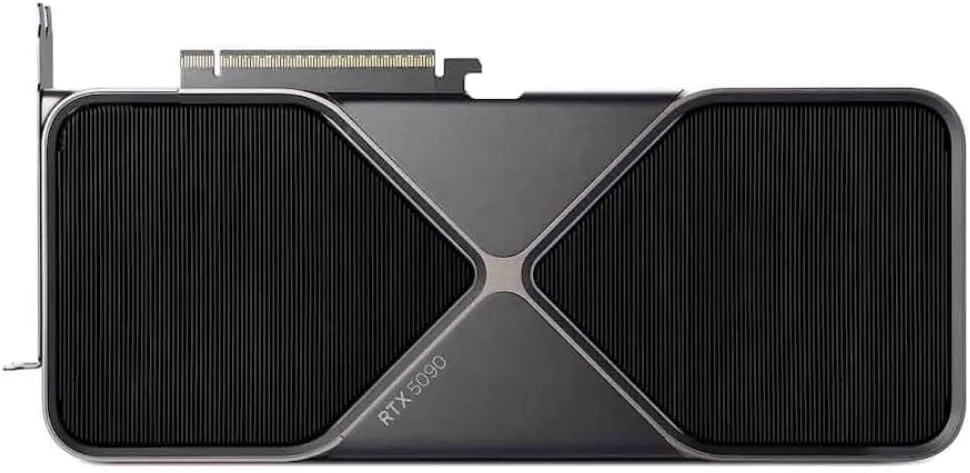
NVIDIA GeForce RTX 5090
Runs up to 30–34B at 4-bit
- 32 GB
- NVIDIA Blackwell (GB202)
32 GB runs 30B-class models comfortably at 4-bit, but a 70B model will not fit on one card. For 70B, plan for two cards or a large unified-memory system.
AED 7,339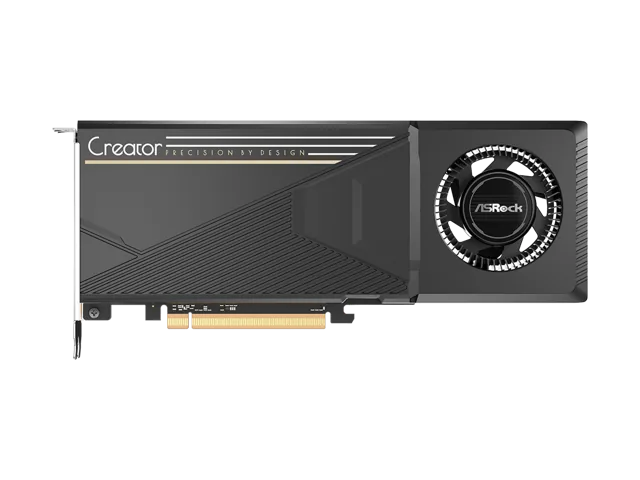
ASRock
ASRock Intel Arc Pro B60 Creator 24GB
Runs up to 30–34B at 4-bit
- 24 GB
- Intel Xe2 (Battlemage)
This is a single-GPU card with 24 GB. It uses a PCIe 5.0 slot wired at x8 and also works in PCIe 4.0 slots; check ASRock's spec sheet for the exact length and power connector before you order.
AED 2,199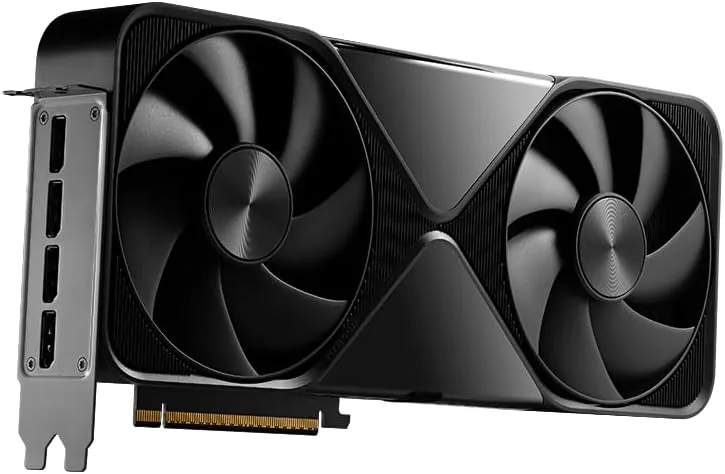
NVIDIA
NVIDIA RTX PRO 6000 Blackwell Workstation Edition (96 GB)
Runs up to 120B+ at 4-bit
- 96 GB
- NVIDIA Blackwell (GB202)
This is the 600 W Workstation Edition with a double flow-through cooler. It needs a 16-pin power cable, a case that takes a 12-inch card and good airflow.
AED 53,599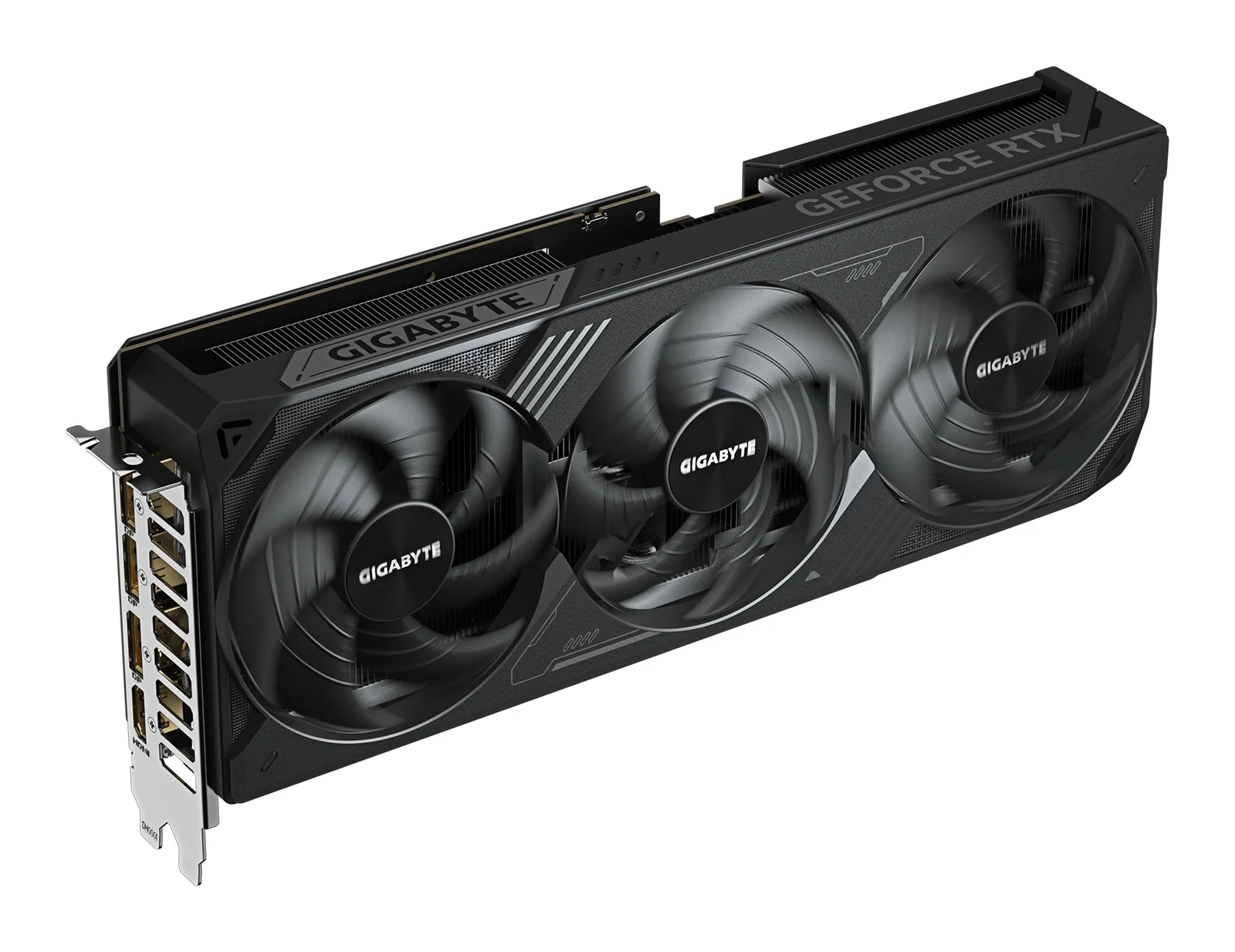
GIGABYTE
GIGABYTE GeForce RTX 5070 Ti WINDFORCE OC SFF 16G
Runs up to 13–14B at 4-bit
- 16 GB
- NVIDIA GeForce RTX 5070 Ti (Blackwell)
It needs one 16-pin power cable or the adapter in the box, which takes two 8-pin PCIe cables. GIGABYTE recommends a 750 W power supply.
AED 3,419