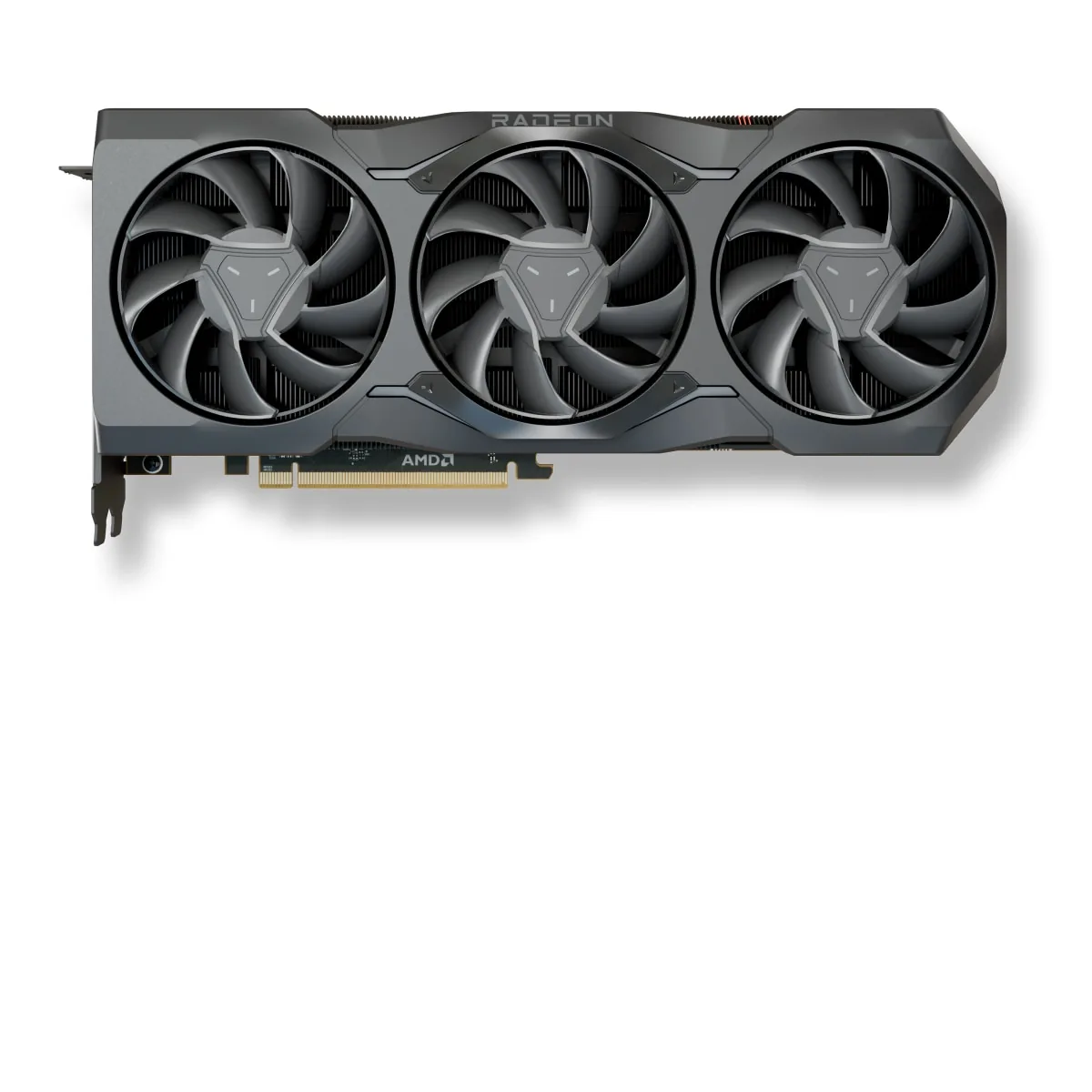
- Radeon RX 7900 XTX24 GB · runs 30–34B models at 4-bit
Full specifications
- GPU
- AMD RDNA 3 (Navi 31)
- Compute units
- 96
- Stream processors
- 6,144
- Memory
- 24 GB GDDR6, 20 Gbps
- Memory interface
- 384-bit
- Infinity Cache
- 96 MB
- Boost clock
- Up to 2,525 MHz (game clock up to 2,330 MHz)
- Interface
- PCIe 4.0 x16
- Board power
- 370 W
- Power connector
- 3 × 8-pin
- Recommended PSU
- 800 W
- Display outputs
- 2 × DisplayPort 2.1, 2 × HDMI
- Cooling
- Three fans, 2.7 slots
- Card size
- 313 × 133.75 × 52.67 mm
Good for
- 4K and high-refresh 1440p gaming
- Trying local models up to 30B at 4-bit on Linux
- Gamers who want 24 GB of memory on one card
Not ideal for
- CUDA-only AI tools
- Single-card 70B inference
- Small cases: the card is 313 mm long and 2.7 slots thick
- Multi-card AI builds: workstation cards are designed for that
SAPPHIRE
SAPPHIRE PULSE AMD Radeon RX 7900 XTX 24GB
SAPPHIRE's PULSE RX 7900 XTX is AMD's RDNA 3 gaming flagship, with 24 GB of GDDR6, 96 MB of Infinity Cache and a three-fan cooler. Strong 4K gaming, and enough memory to run 30B-class models at 4-bit with ROCm.
AED 3,639Charged in US dollars at checkout: $990. Import duties and taxes included.In stock. Dispatched in 1 to 3 business days.
- Free shipping to the UAE
- Ships from our warehouse in Malaysia
- 30-day returns
- Import duties and taxes included
- Shipping, returns and warranty
The PULSE is 313 mm long and 2.7 slots thick, with three 8-pin power connectors. Measure your case and check your power supply (800 W minimum) before ordering.
Who it's for
Gamers who also want to experiment with local AI on 24 GB of memory.
Full specifications
- GPU
- AMD RDNA 3 (Navi 31)
- Compute units
- 96
- Stream processors
- 6,144
- Memory
- 24 GB GDDR6, 20 Gbps
- Memory interface
- 384-bit
- Infinity Cache
- 96 MB
- Boost clock
- Up to 2,525 MHz (game clock up to 2,330 MHz)
- Interface
- PCIe 4.0 x16
- Board power
- 370 W
- Power connector
- 3 × 8-pin
- Recommended PSU
- 800 W
- Display outputs
- 2 × DisplayPort 2.1, 2 × HDMI
- Cooling
- Three fans, 2.7 slots
- Card size
- 313 × 133.75 × 52.67 mm
About the SAPPHIRE PULSE AMD Radeon RX 7900 XTX 24GB
The SAPPHIRE PULSE Radeon RX 7900 XTX is AMD's RDNA 3 gaming flagship on SAPPHIRE's three-fan board, with 24 GB of memory for 4K gaming and local AI experiments. It runs 30B-class models at 4-bit and 14B at 8-bit with ROCm on Linux. Choose it if gaming comes first and you want to try local models on the side; for CUDA-only tools, pick an NVIDIA card.
Key features
- 24 GB GDDR6 on a 384-bit bus, up to 960 GB/s
- 96 MB Infinity Cache
- 96 compute units and 6,144 stream processors, up to 2,525 MHz boost
- 61.4 TFLOPS FP32, 123 TFLOPS FP16 matrix
- 370 W total board power, 3 × 8-pin, 800 W PSU minimum
- 2 × DisplayPort 2.1 and 2 × HDMI
- Supported in AMD ROCm on Linux
What it runs
About 90% of 24 GB is usable, enough for 30B-class models at 4-bit and 14B models at 8-bit. Long contexts at 30B may need a smaller quantisation. 70B models do not fit on one card; two cards (48 GB) can hold a 70B model at 4-bit split across both. Check exact sizes in our model fit tool.
Performance context
Its 960 GB/s of memory bandwidth is close to the RTX 4090's, so on models that fit, text generation is quick where the software path is well optimised. llama.cpp runs on it through ROCm or Vulkan, and Ollama and LM Studio both support Radeon cards. Image generation and training tools are more mixed: many still assume CUDA, so check yours first.
For gaming it targets 4K at high settings, with AMD FSR upscaling and Fluid Motion Frames adding frame rate in supported games. The 96 MB Infinity Cache raises effective bandwidth to as much as 3,500 GB/s, which helps at high resolutions.
Outputs and video
The SAPPHIRE PULSE has two DisplayPort 2.1 outputs and two HDMI outputs, with hardware AV1, HEVC and H.264 encode and decode.
Power and fit
Total board power is 370 W on the SAPPHIRE PULSE, fed by three 8-pin connectors, and SAPPHIRE recommends at least an 800 W power supply. The card is 313 mm long and 2.7 slots thick, with three fans, so measure your case first. Our guide to fitting a high-end graphics card walks through it.
Software
AMD lists the RX 7900 XTX as a supported GPU in its ROCm documentation for Linux (Ubuntu and RHEL), so PyTorch with ROCm works on it. On Windows, gaming drivers are mature, while AI support depends on the tool; many use Vulkan. Linux gives the most complete ROCm stack for serious AI work.
What to pair it with
An 800 W power supply, a case with room for a long card, and Linux on a second drive if you plan to run models. If AI is the main job, compare the Radeon AI PRO R9700 (32 GB, FP8, lower power) and the GeForce RTX 4090 (24 GB with CUDA) in our graphics card guide for local AI.
Good for
- 4K and high-refresh 1440p gaming
- Trying local models up to 30B at 4-bit on Linux
- Gamers who want 24 GB of memory on one card
Not ideal for
- CUDA-only AI tools
- Single-card 70B inference
- Small cases: the card is 313 mm long and 2.7 slots thick
- Multi-card AI builds: workstation cards are designed for that
What it can run
Up to 30–34B at 4-bit, 13–14B at 8-bit (approximate)
Based on 24 GB of GPU memory. See every machine by model size
Guides for this product
Graphics cards · 5 min read
Choosing a GPU for Local AI: RTX 5090, R9700, B60
Choose a GPU for local AI by memory, software and bandwidth: RTX 5090, Radeon AI PRO R9700, Arc Pro B60 and the 48 GB and 96 GB workstation cards.
Read the guide →Graphics cards · 4 min read
Fitting a High-End Graphics Card: Power, Case, Cooling
Before you order a high-end graphics card: power supply wattage, the 16-pin connector, case size, PCIe slots, airflow and running two cards.
Read the guide →Watch it in action
Official videos from the manufacturer's own channel. They load only when you press play.
Reviews
Atomrig customer reviews
No customer reviews yet. Bought this from us? Tell us how it runs.
Related products
NVIDIA
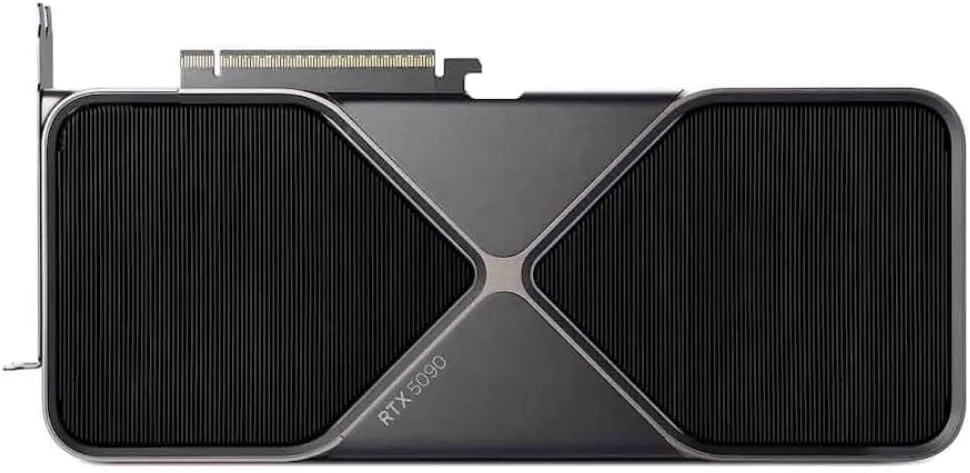
NVIDIA GeForce RTX 5090
- 32 GB
- NVIDIA Blackwell (GB202)
Runs up to 30–34B at 4-bit
32 GB runs 30B-class models comfortably at 4-bit, but a 70B model will not fit on one card. For 70B, plan for two cards or a large unified-memory system.
AED 7,339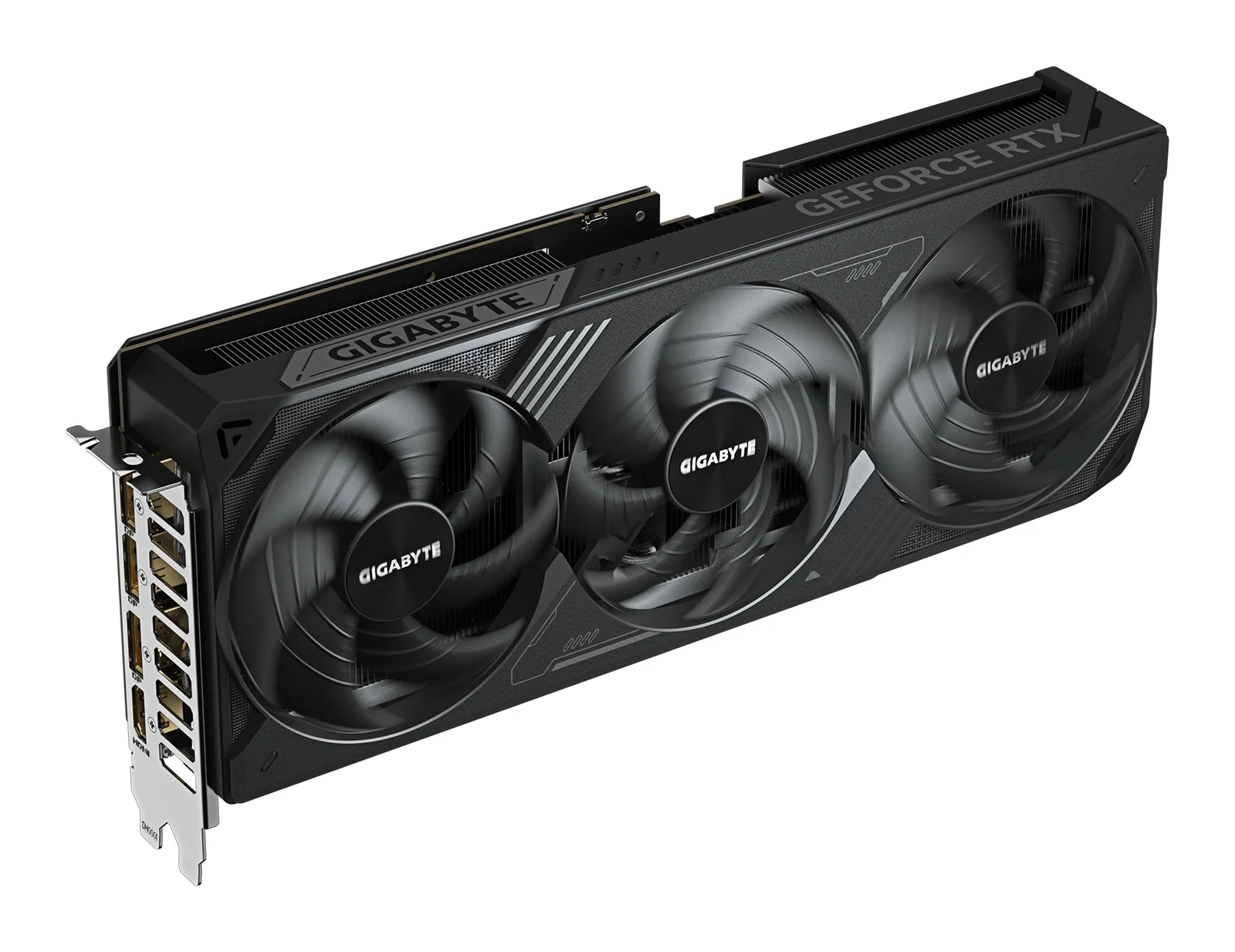
GIGABYTE
GIGABYTE GeForce RTX 5070 Ti WINDFORCE OC SFF 16G
- 16 GB
- NVIDIA GeForce RTX 5070 Ti (Blackwell)
Runs up to 13–14B at 4-bit
It needs one 16-pin power cable or the adapter in the box, which takes two 8-pin PCIe cables. GIGABYTE recommends a 750 W power supply.
AED 3,419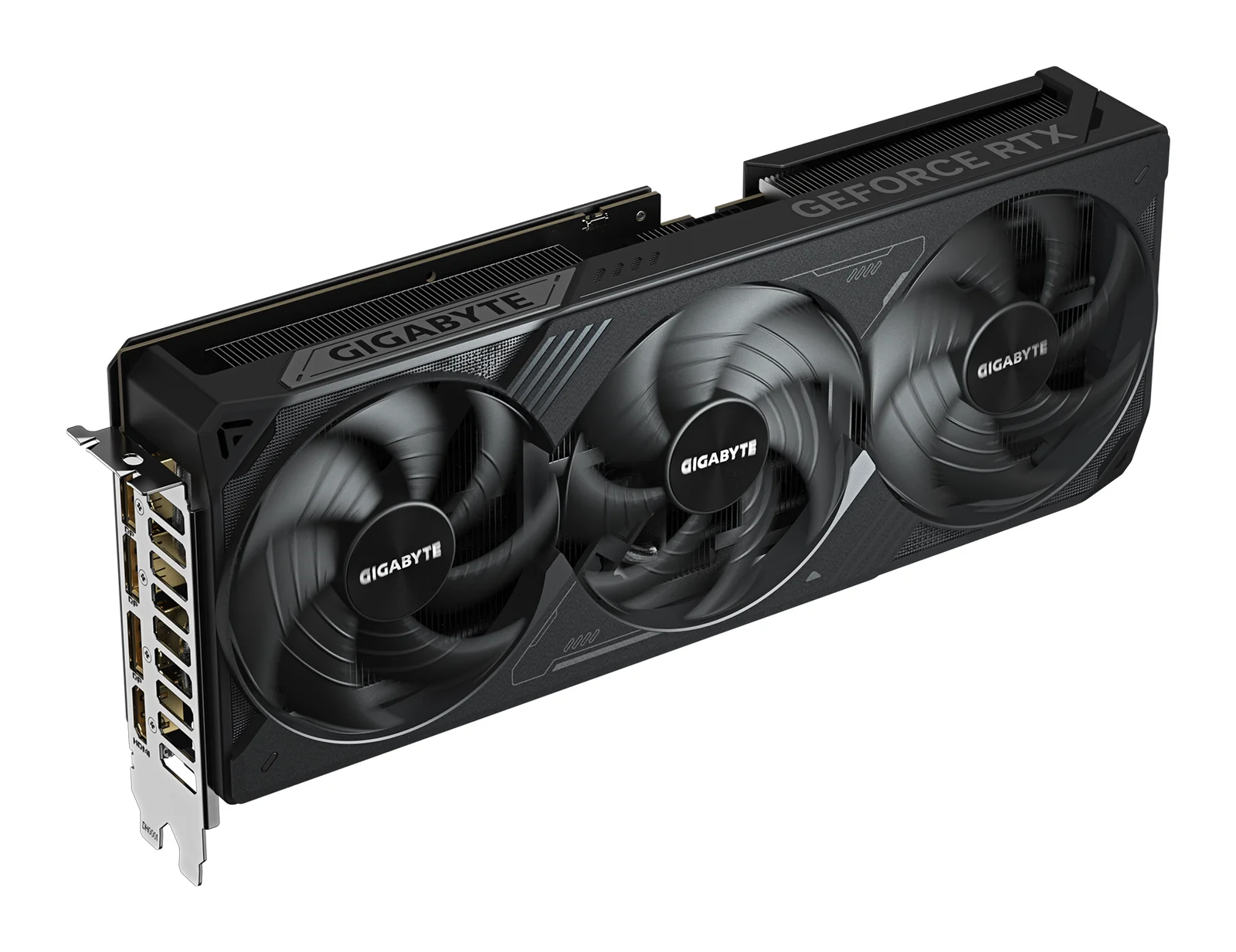
GIGABYTE
GIGABYTE GeForce RTX 5080 WINDFORCE OC SFF 16G
- 16 GB
- NVIDIA GeForce RTX 5080 (Blackwell)
Runs up to 13–14B at 4-bit
It has the same 16 GB as the RTX 5070 Ti, so it does not fit larger AI models; it runs them faster. For more memory on one card, look at the RTX 5090 or a 24 to 32 GB card.
AED 4,359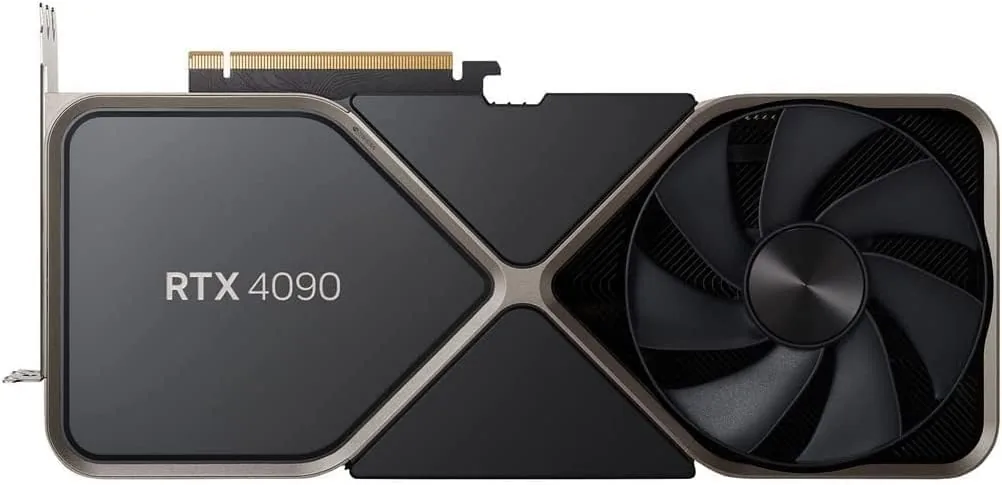
NVIDIA
NVIDIA GeForce RTX 4090
- 24 GB
- NVIDIA Ada Lovelace (AD102)
Runs up to 30–34B at 4-bit
Push the 16-pin power cable fully into the card and avoid sharp bends close to the plug. A loose connector is the most common cause of trouble with this card.
AED 6,469