NVIDIA DGX Spark: Who It Is For and When to Skip It
Updated 17 November 2026 · 4 min read
The DGX Spark is a CUDA development machine with 128 GB of memory, not the fastest way to chat with a large model. Buy it if you build, fine-tune or test models on NVIDIA's stack and want that code to move to bigger DGX systems or the cloud. If you mainly want to run big models quickly, a Mac Studio or a graphics card is often the better fit.
What it is#
- NVIDIA GB10 Grace Blackwell superchip.
- 20-core Arm CPU (10 × Cortex-X925, 10 × Cortex-A725).
- Blackwell GPU with 5th-generation Tensor Cores; up to 1 petaFLOP at FP4 with sparsity.
- 128 GB of LPDDR5x coherent unified memory at 273 GB/s.
- 4 TB NVMe on the NVIDIA Founders Edition; partner versions vary.
- NVIDIA ConnectX-7 (200 Gb/s) and 10 Gigabit Ethernet.
- NVIDIA DGX OS, based on Ubuntu.
- 150 × 150 × 50.5 mm.
What it does well#
- Capacity. 128 GB holds a 70B model at 8-bit or a 120B-class model at 4-bit, by our model guide figures.
- The CUDA stack. It ships with NVIDIA's AI software, so code written here moves to larger DGX systems and the cloud with little change.
- Scaling. Two units can be linked over the built-in ConnectX-7 networking for work that outgrows one.
- Size. It is a 150 mm square box that sits on a desk, with no tower, case or power-supply planning.
Where it is weaker#
Memory bandwidth is 273 GB/s. A Mac Studio with M3 Ultra moves 819 GB/s and an RTX 5090 1,792 GB/s. Because text generation reads through the weights for every token, large dense models generate more slowly on the Spark than on those machines. Mixture-of-experts models, which use only part of their weights per token, feel the gap less.
It is also not a general-purpose PC. The CPU is Arm and the operating system is DGX OS, a Linux system based on Ubuntu. Software built only for x86 Windows will not run, and it is not a gaming machine.
DGX Spark vs Mac Studio vs a graphics card#
| DGX Spark | Mac Studio (M3 Ultra) | RTX 5090 | RTX PRO 6000 | |
|---|---|---|---|---|
| Memory | 128 GB unified | 96 GB unified standard, larger to order | 32 GB GDDR7 | 96 GB GDDR7 with ECC |
| Bandwidth | 273 GB/s | 819 GB/s | 1,792 GB/s | 1,792 GB/s |
| Software | CUDA, DGX OS | macOS, Metal, MLX | CUDA | CUDA |
| Largest size at 4-bit | 120B+ | 70B (96 GB configuration) | 27–34B | 120B+ |
| What else you need | Nothing | Nothing | A tower and a 1,000 W power supply | A workstation tower |
Who should buy which#
- You prototype and fine-tune on CUDA and deploy to bigger NVIDIA systems: the DGX Spark.
- You want to run the largest open models quickly on one quiet machine: the Mac Studio.
- You want the fastest speed on models up to about 30B, and you also game: the RTX 5090.
- You want the most memory on one CUDA card in a workstation you already have: the RTX PRO 6000.
- You want 128 GB on an x86 machine that runs Windows or Linux: a Ryzen AI Max+ mini PC.
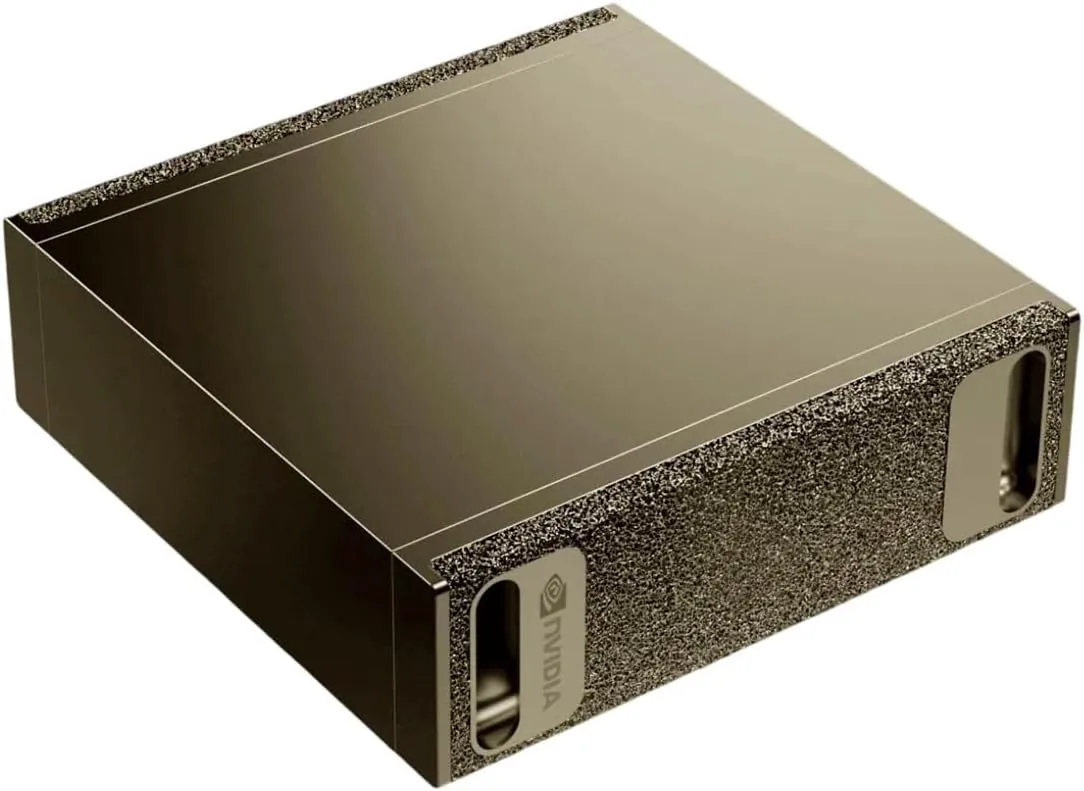
NVIDIA
NVIDIA DGX Spark
Runs up to 120B+ at 4-bit
- 128 GB unified
- NVIDIA GB10 Grace Blackwell
Its memory bandwidth (273 GB/s) is lower than a high-end graphics card's, so large dense models generate text more slowly than they would on an RTX 5090. Its strengths are capacity and the CUDA software stack.
$4,699 – $10,593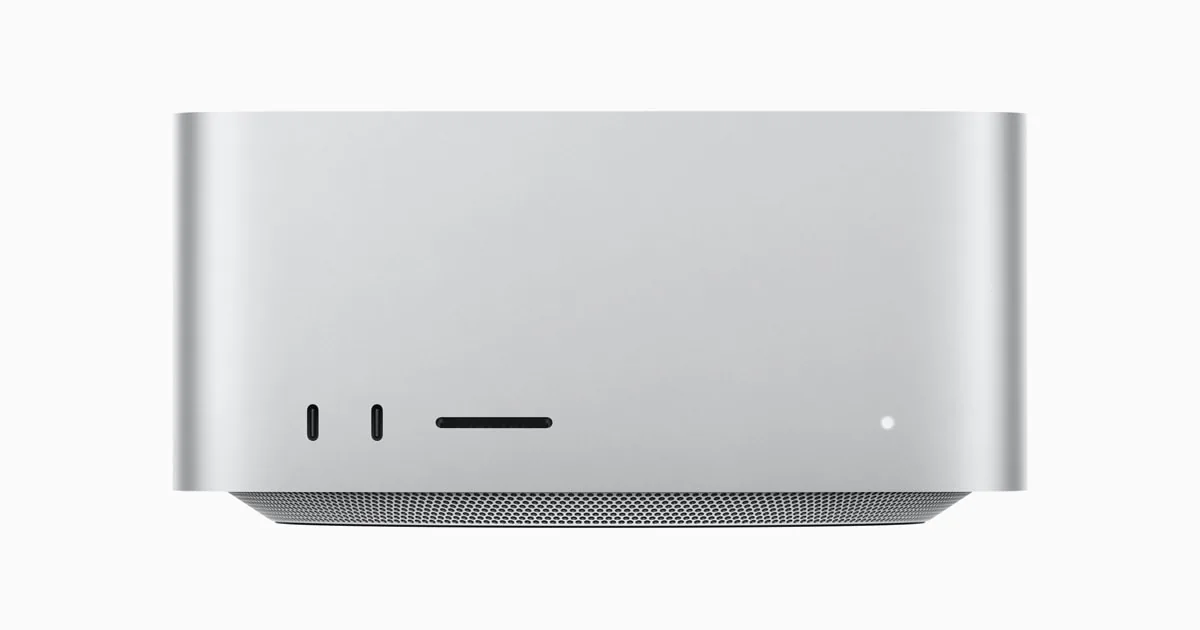
Apple
Apple Mac Studio (M3 Ultra)
Runs up to 70B at 4-bit
- 96 GB unified
- 60-core; 80-core option
macOS keeps part of the unified memory for the system, so plan for the GPU to use most of it, not all. Size the configuration with some headroom above the model.
$4,404 – $10,682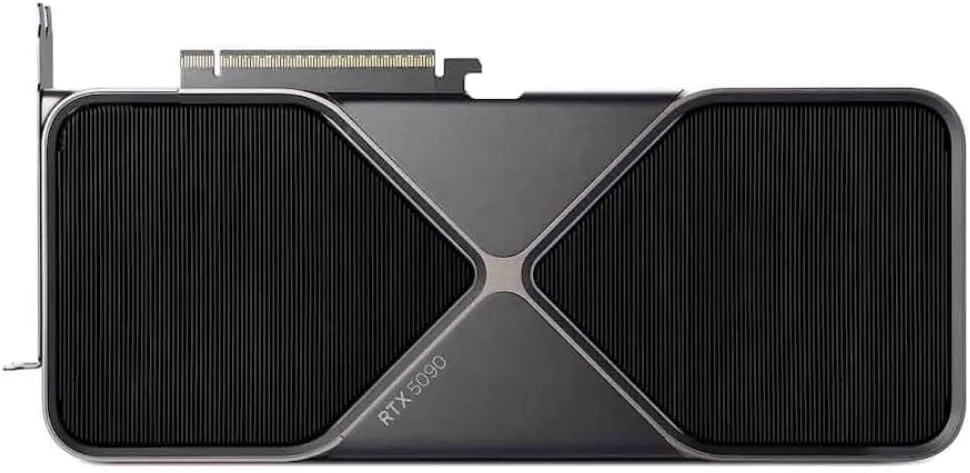
NVIDIA
NVIDIA GeForce RTX 5090
Runs up to 30–34B at 4-bit
- 32 GB
- NVIDIA Blackwell (GB202)
32 GB runs 30B-class models comfortably at 4-bit, but a 70B model will not fit on one card. For 70B, plan for two cards or a large unified-memory system.
$1,999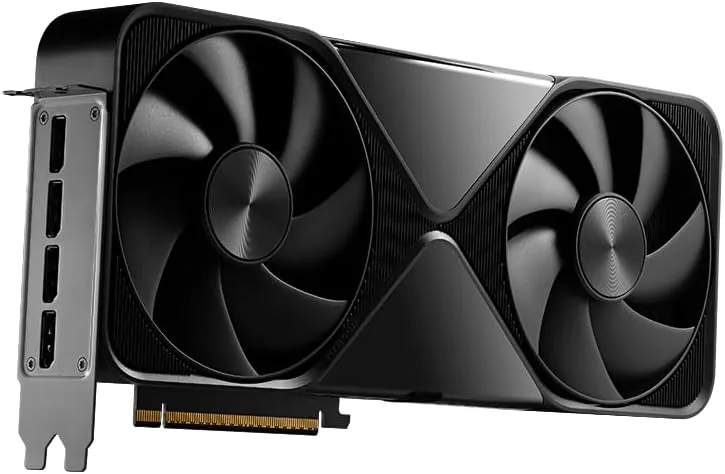
NVIDIA
NVIDIA RTX PRO 6000 Blackwell (96 GB)
Runs up to 120B+ at 4-bit
- 96 GB
- NVIDIA Blackwell (GB202)
Pick the Max-Q Workstation Edition (300 W, blower) when you plan to stack several cards in one chassis; the 600 W Workstation Edition is the faster choice for a single card.
$14,594Fine-tuning on the Spark#
Fine-tuning needs more memory than running a model, because training keeps extra data for every weight it updates. Parameter-efficient methods such as LoRA train a small set of added weights and cut that need sharply, which is how most people fine-tune large models on a single machine. The Spark's 128 GB gives room for that work at sizes a 32 GB card cannot reach.
A cheaper machine is enough when you only run models, not build them. For chat and coding help on models up to 14B, a 16 GB card or a Mac mini with 24 GB does the job.
Questions people ask
Can the DGX Spark run Windows?
It ships with NVIDIA DGX OS, a Linux system based on Ubuntu, on an Arm CPU. Software built only for x86 Windows will not run on it.
Is the DGX Spark faster than an RTX 5090?
Not for models that fit on the RTX 5090. The card has 1,792 GB/s of memory bandwidth against the Spark's 273 GB/s. The Spark holds much larger models, with 128 GB against 32 GB.
Can I link two DGX Sparks?
Yes. Two units can be connected over the built-in NVIDIA ConnectX-7 networking (200 Gb/s) for models or jobs too large for one.
How much storage does it have?
The NVIDIA Founders Edition has 4 TB of NVMe storage. Partner versions vary, so check the listing for the version you buy.
Related guides
Local AI · 5 min read
Mac vs NVIDIA vs Ryzen AI Max+ for Local AI
Which platform fits which work: CUDA on NVIDIA, unified memory on a Mac, or 128 GB on a Ryzen AI Max+ mini PC. Memory, software and trade-offs.
Read the guide →Graphics cards · 5 min read
Graphics Cards for Local AI: RTX 5090 vs R9700 vs B60
Choose a graphics card for local AI by memory, software and bandwidth: RTX 5090, Radeon AI PRO R9700, Arc Pro B60 and the 48 GB and 96 GB pro cards.
Read the guide →Local AI · 5 min read
How Much Memory Do You Need to Run a Local LLM?
Memory needed for 7B to 120B+ models at 4-bit and 8-bit, how unified memory differs from VRAM, and which machines hold each size.
Read the guide →