Category
Gaming CPUs: AMD Ryzen 7 X3D processors
Gaming CPUs from AMD with 3D V-Cache: the Ryzen desktop processors most often paired with a fast graphics card.
For a gaming PC, choose the processor by its cache, not only its core count. AMD's X3D chips stack extra cache on the processor, 96 MB of L3 on both Ryzen 7 models, and that keeps frame rates high and steady in games. Both fit AM5 motherboards and use DDR5 memory; the 9850X3D boosts higher than the 9800X3D.
Our picks
The highest boost clock
Ryzen 7 X3DOut of stock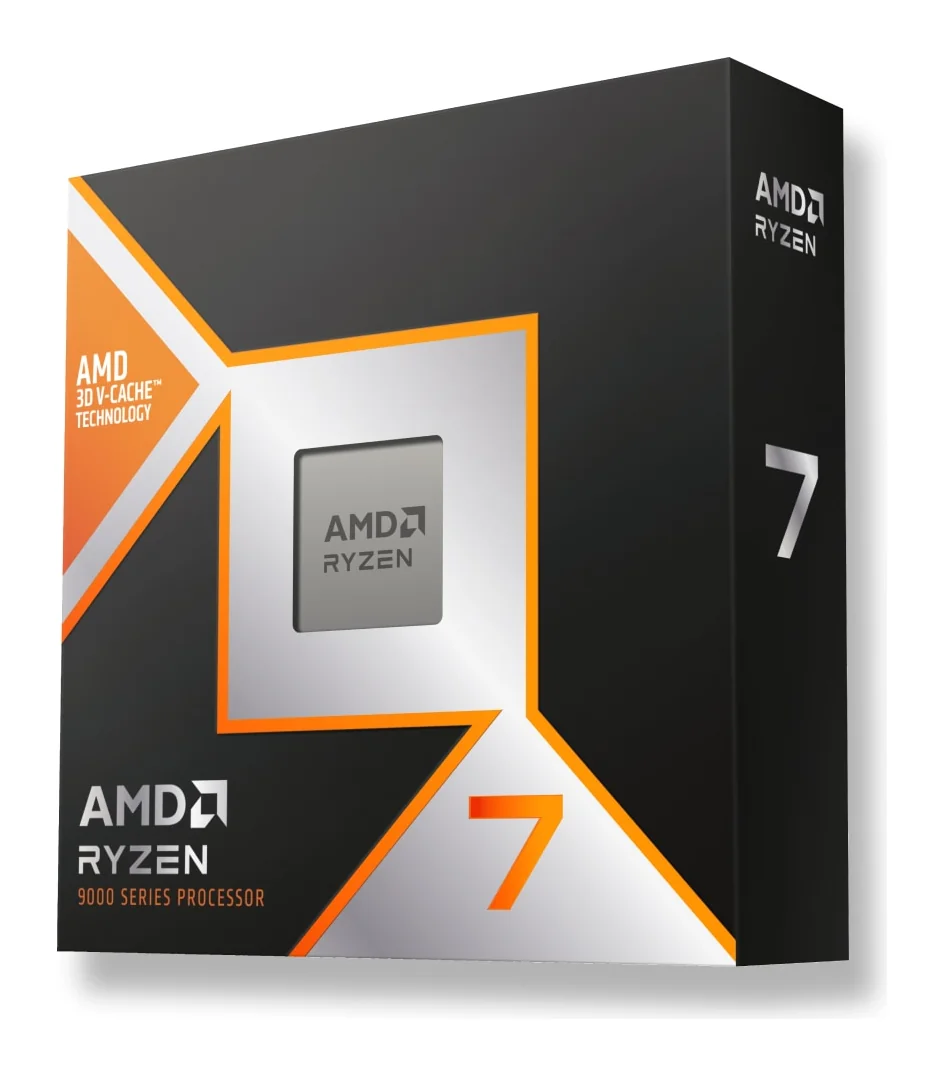
AMD
AMD Ryzen 7 9850X3D
- 8 cores / 16 threads
- 4.7 GHz base, up to 5.6 GHz boost
No cooler comes in the box and AMD recommends liquid cooling. On an older AM5 board, update the BIOS before you fit the chip.
£329Eight Zen 5 cores, 96 MB of L3 cache and up to 5.6 GHz.
The same cache for a little less
Ryzen 7 X3DOut of stock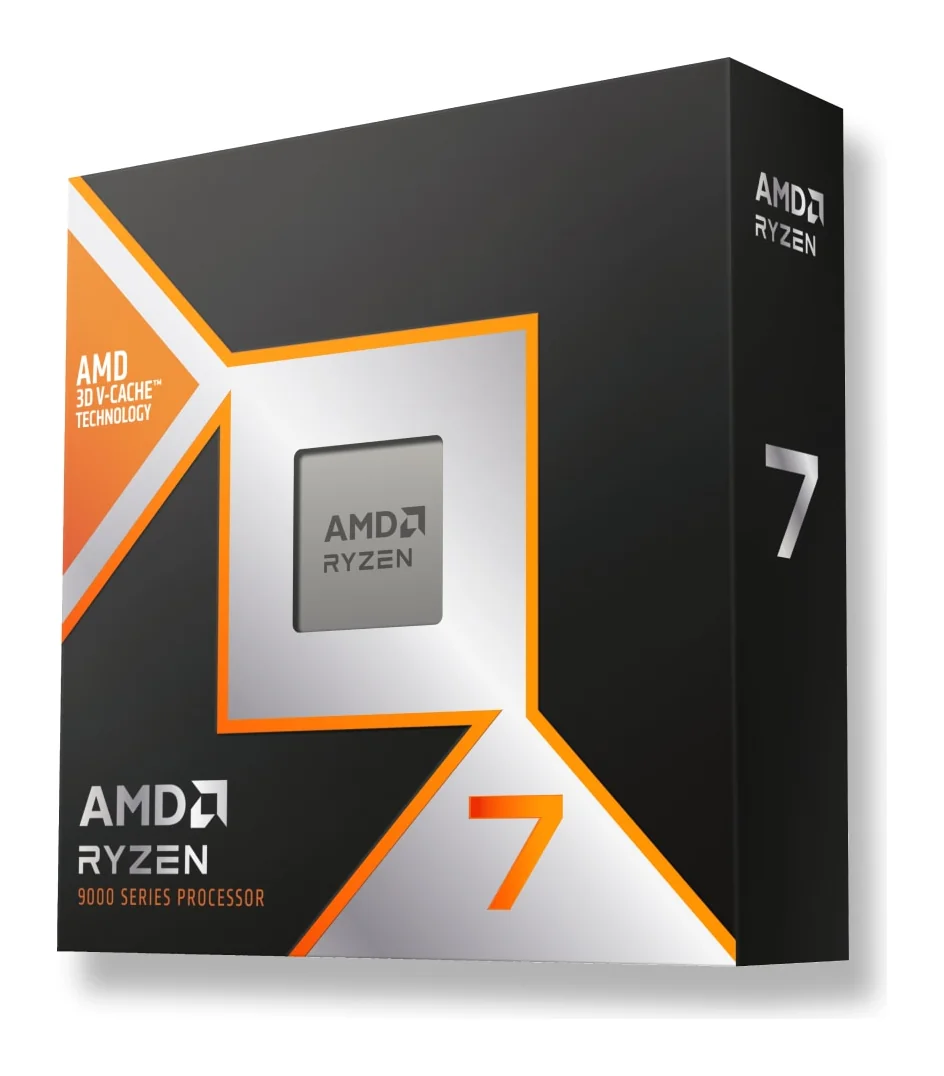
AMD
AMD Ryzen 7 9800X3D
- 8 cores / 16 threads
- 4.7 GHz base, up to 5.2 GHz boost
It has the same cores and cache as the 9850X3D; the difference is the boost clock (5.2 GHz against 5.6 GHz). No cooler is included, so budget for a good air cooler or a liquid cooler.
£319The same cores and cache, with a boost clock of up to 5.2 GHz.
AMD
AMD Ryzen 7 9850X3D
- 8 cores / 16 threads
- 4.7 GHz base, up to 5.6 GHz boost
No cooler comes in the box and AMD recommends liquid cooling. On an older AM5 board, update the BIOS before you fit the chip.
£329AMD
AMD Ryzen 7 9800X3D
- 8 cores / 16 threads
- 4.7 GHz base, up to 5.2 GHz boost
It has the same cores and cache as the 9850X3D; the difference is the boost clock (5.2 GHz against 5.6 GHz). No cooler is included, so budget for a good air cooler or a liquid cooler.
£319How to choose a gaming processor
- Cache matters most in games
- Games reuse the same data constantly. With 96 MB of L3 cache, more of it stays on the chip, which lifts the lowest frame rates as much as the average. That is why the X3D chips lead gaming tests.
- Check the motherboard first
- Both processors use the AM5 socket and DDR5 memory. On an older AM5 board, update the BIOS to a version that supports the chip before you fit it. AM4 boards do not take them.
- Budget for a cooler
- Neither comes with a cooler. Both are rated at 120 W, and AMD recommends liquid cooling; a large tower air cooler is the common alternative.
- Balance it with the graphics card
- A fast processor pays off with a fast card: pair it with an RTX 5070 Ti, an RTX 5080 or an RX 9070 XT. At 4K the graphics card sets the pace more than the processor.
Questions people ask
9850X3D or 9800X3D?
Both have eight cores and 96 MB of L3 cache. The 9850X3D boosts to 5.6 GHz and the 9800X3D to 5.2 GHz, so the 9850X3D is a little faster where the clock matters. Choose by price if the difference is small to you.
Do these processors come with a cooler?
No. Plan for a liquid cooler, which AMD recommends, or a large tower air cooler rated for at least 120 W.
Will they fit my motherboard?
They fit AM5 motherboards with a BIOS that supports them; check your board maker's support list and update the BIOS first if needed. They do not fit AM4 boards.
Related pages: Graphics cards for 4K gaming · Graphics cards
Guides
Graphics cards · 5 min read
Choosing a GPU for 1440p Gaming: 12 GB or 16 GB
Choosing a GPU for 1440p gaming: RTX 5070 Ti, RX 9070 XT, RTX 5070, RTX 5060 Ti 16GB and RX 9060 XT 16GB, by memory, refresh rate, power and case size.
Read the guide →Graphics cards · 4 min read
Fitting a High-End Graphics Card: Power, Case, Cooling
Before you order a high-end graphics card: power supply wattage, the 16-pin connector, case size, PCIe slots, airflow and running two cards.
Read the guide →