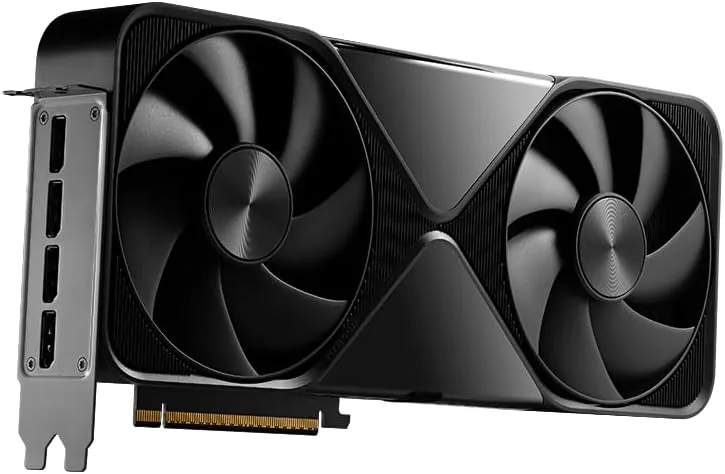
- RTX PRO 600096 GB · runs 120B+ models at 4-bit
Full specifications
- GPU
- NVIDIA Blackwell (GB202)
- CUDA cores
- 24,064
- Memory
- 96 GB GDDR7 with ECC
- Memory interface
- 512-bit, 1,792 GB/s
- Tensor Cores
- 5th generation
- RT Cores
- 4th generation
- Interface
- PCIe 5.0 x16
- Display outputs
- 4 × DisplayPort 2.1
- Board power
- 600 W
- Power connector
- 1 × 16-pin PCIe CEM5
- Cooling
- Double flow-through, dual slot
- Card size
- 5.4 in × 12 in (137 × 305 mm)
- Multi-Instance GPU
- Up to 4 instances
Good for
- Running 70B models at 8-bit or 120B-class models at 4-bit on one card
- Teams that fine-tune or serve models on CUDA and want to avoid splitting models across GPUs
- Studios with very large scenes, simulations or video timelines
- Shared machines, using MIG to split the card into isolated instances
Not ideal for
- Models up to 30B: a 32 GB GeForce RTX 5090 or Radeon AI PRO R9700 runs them
- Gaming builds: a GeForce card gives the same gaming speed
- Compact cases or modest power supplies: it needs room, airflow and a strong PSU
NVIDIA
NVIDIA RTX PRO 6000 Blackwell Workstation Edition (96 GB)
The RTX PRO 6000 is NVIDIA's flagship workstation card: the full Blackwell GB202 GPU with 96 GB of ECC GDDR7 on a single board. That is enough to hold a 70B model at 8-bit on one card, with the full CUDA software ecosystem behind it.
£11,079Charged in euros at checkout: €13,250. Import duties and taxes included.In stock. Dispatched in 1 to 3 business days.
- Free shipping over €199, charged in euros
- Ships from our UK warehouse
- 30-day returns
- Import duties and taxes included
- Shipping, returns and warranty
This is the 600 W Workstation Edition with a double flow-through cooler. It needs a 16-pin power cable, a case that takes a 12-inch card and good airflow.
Who it's for
AI engineers and studios who need the most memory available on one CUDA card.
Full specifications
- GPU
- NVIDIA Blackwell (GB202)
- CUDA cores
- 24,064
- Memory
- 96 GB GDDR7 with ECC
- Memory interface
- 512-bit, 1,792 GB/s
- Tensor Cores
- 5th generation
- RT Cores
- 4th generation
- Interface
- PCIe 5.0 x16
- Display outputs
- 4 × DisplayPort 2.1
- Board power
- 600 W
- Power connector
- 1 × 16-pin PCIe CEM5
- Cooling
- Double flow-through, dual slot
- Card size
- 5.4 in × 12 in (137 × 305 mm)
- Multi-Instance GPU
- Up to 4 instances
About the NVIDIA RTX PRO 6000 Blackwell Workstation Edition (96 GB)
The RTX PRO 6000 Blackwell is the card to buy when you need the most memory NVIDIA offers on one desktop board: 96 GB of ECC GDDR7. It holds a 70B model at 8-bit, or a 120B-class model at 4-bit, on a single card with full CUDA support. It is built for AI engineers, research teams and studios; for models up to 30B, a 32 GB card does the job.
Key features
- 96 GB GDDR7 with ECC on a 512-bit bus, 1,792 GB/s
- Blackwell GPU with 24,064 CUDA cores and 5th-generation Tensor Cores with FP4 support
- Up to 4,000 AI TOPS (FP4, with sparsity) on the Workstation Edition
- Multi-Instance GPU: up to four isolated 24 GB instances
- PCIe 5.0 x16 and 4 × DisplayPort 2.1
- 600 W Workstation Edition: double flow-through cooler, dual slot, one 16-pin connector
What it runs
With 96 GB on one card and about 90% of it usable after context and runtime buffers, the RTX PRO 6000 covers every tier in our model fit tool up to 120B-class models at 4-bit and 70B models at 8-bit. A 120B model at 8-bit needs roughly 140 GB and does not fit; that takes two cards. Mixture-of-experts models such as gpt-oss-120b still need memory for all of their weights, so they sit in the same tier.
Because the whole model lives on one GPU, nothing has to be split across cards and no data crosses PCIe between GPUs while it generates. Setup stays simple and long-context work is more predictable. The same capacity helps outside language models: large image and video models, several models loaded at once for an agent pipeline, or fine-tuning mid-size models without constant out-of-memory errors.
Performance context
The card uses the GB202 GPU, the same chip as the GeForce RTX 5090, with more CUDA cores enabled (24,064 against 21,760) and three times the memory. Both have 1,792 GB/s of memory bandwidth, so on a model that fits on either card, text generation speed is in the same range. The RTX PRO 6000 earns its place when the model, the context or the batch does not fit in 32 GB. NVIDIA rates it at 126 TFLOPS FP32 and up to 4,000 AI TOPS at FP4 with sparsity.
The Workstation Edition
| Workstation Edition | |
|---|---|
| Board power | 600 W |
| Cooling | Double flow-through |
| Size | 5.4 in × 12 in, dual slot |
| AI TOPS (FP4, with sparsity) | 4,000 |
| Power connector | 1 × 16-pin PCIe CEM5 |
This listing is the 600 W Workstation Edition. Its flow-through cooler releases its heat inside the case, which suits one card in a well-ventilated tower. NVIDIA also makes a 300 W Max-Q version for several cards side by side; it is a different card and not this one.
Power and installation
The Workstation Edition draws up to 600 W through one 16-pin PCIe CEM5 connector. Plan for a quality power supply with a native 16-pin cable and enough headroom for the rest of the system, and check that your case takes a 12-inch, extended-height card. Our guide to fitting a high-end graphics card covers clearance, cables and airflow.
Software
It runs the full CUDA stack, including PyTorch, TensorRT, vLLM and llama.cpp, on Windows and Linux. Blackwell needs a recent driver and CUDA 12.8 or later, so older containers and prebuilt packages may need updating. NVIDIA's enterprise drivers and ISV certifications cover CAD and content-creation software, and ECC memory protects long training and simulation runs.
What to pair it with
A workstation platform with plenty of system RAM (matching the card's 96 GB is a sensible floor for loading and converting large models), fast NVMe storage for model files, and a power supply sized for 600 W of GPU load plus the rest of the system. If 96 GB is more than you need, the GeForce RTX 5090 gives similar speed on models up to 30B, and the Radeon PRO W7900 offers 48 GB at lower power. Our graphics card guide for local AI compares the options.
Good for
- Running 70B models at 8-bit or 120B-class models at 4-bit on one card
- Teams that fine-tune or serve models on CUDA and want to avoid splitting models across GPUs
- Studios with very large scenes, simulations or video timelines
- Shared machines, using MIG to split the card into isolated instances
Not ideal for
- Models up to 30B: a 32 GB GeForce RTX 5090 or Radeon AI PRO R9700 runs them
- Gaming builds: a GeForce card gives the same gaming speed
- Compact cases or modest power supplies: it needs room, airflow and a strong PSU
What it can run
Up to 120B+ at 4-bit, 70B at 8-bit (approximate)
Based on 96 GB of GPU memory. See every machine by model size
Guides for this product
Graphics cards · 5 min read
Choosing a GPU for Local AI: RTX 5090, R9700, B60
Choose a GPU for local AI by memory, software and bandwidth: RTX 5090, Radeon AI PRO R9700, Arc Pro B60 and the 48 GB and 96 GB workstation cards.
Read the guide →Local AI · 4 min read
DGX Spark vs Mac Studio: Who the Spark Is For
Is the DGX Spark worth it? What it does well, where it is slower, and how it compares with a Mac Studio, an RTX 5090 and an RTX PRO 6000 for local AI.
Read the guide →Watch it in action
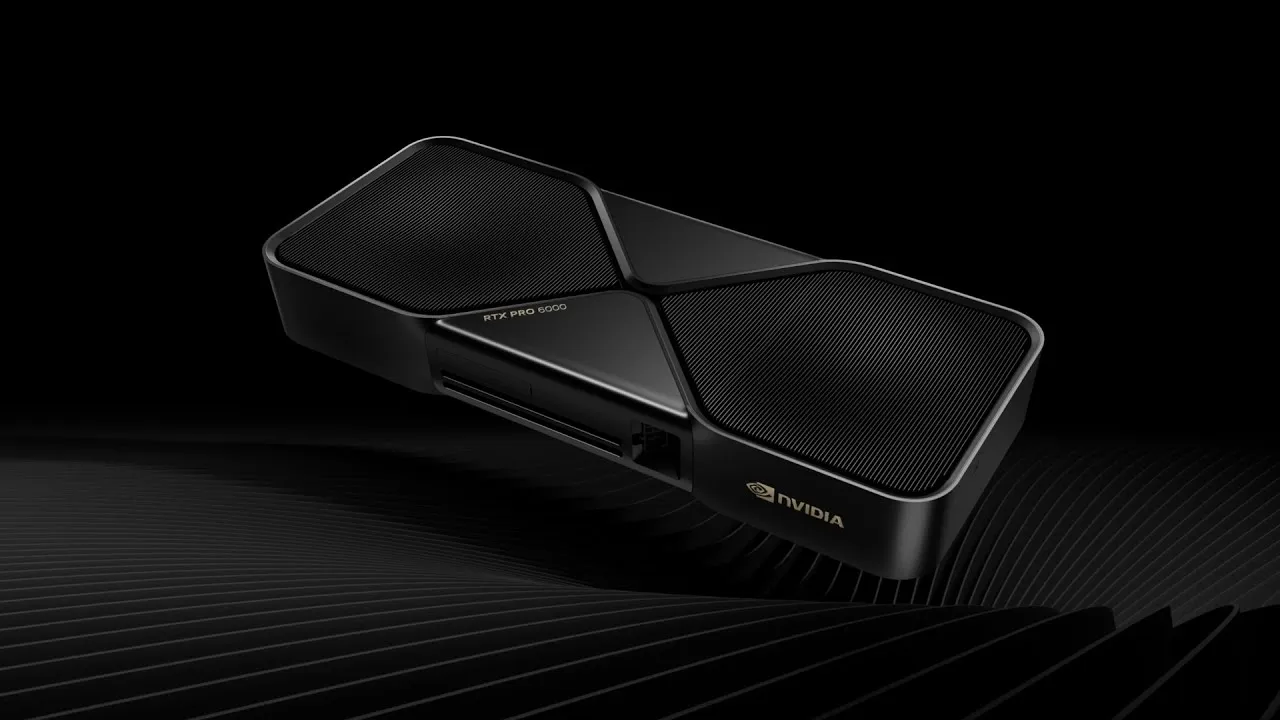
Official videos from the manufacturer's own channel. They load only when you press play.
Reviews
What reviewers say
StorageReview
The most capable workstation card they had tested. The 96 GB of memory is the headline for long-context AI work; a consumer card can still win single speed tests.
Read the review
Atomrig customer reviews
No customer reviews yet. Bought this from us? Tell us how it runs.
Related products
NVIDIA
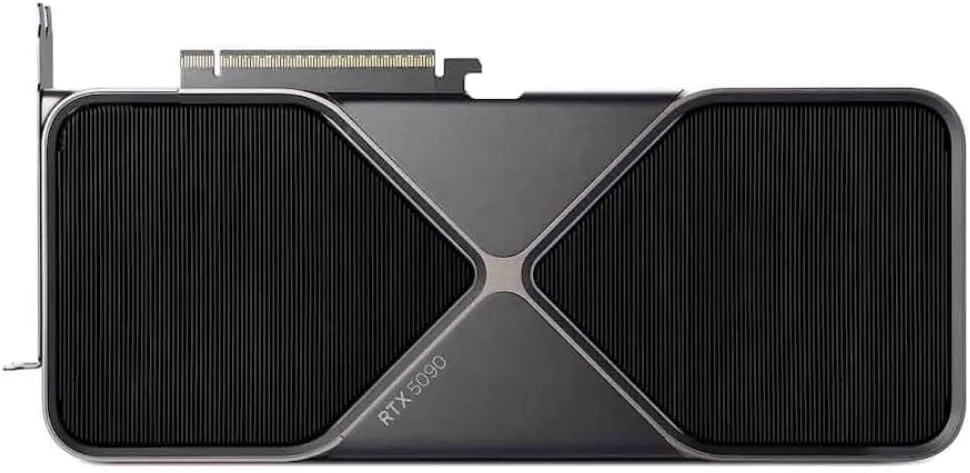
NVIDIA GeForce RTX 5090
- 32 GB
- NVIDIA Blackwell (GB202)
Runs up to 30–34B at 4-bit
32 GB runs 30B-class models comfortably at 4-bit, but a 70B model will not fit on one card. For 70B, plan for two cards or a large unified-memory system.
£1,669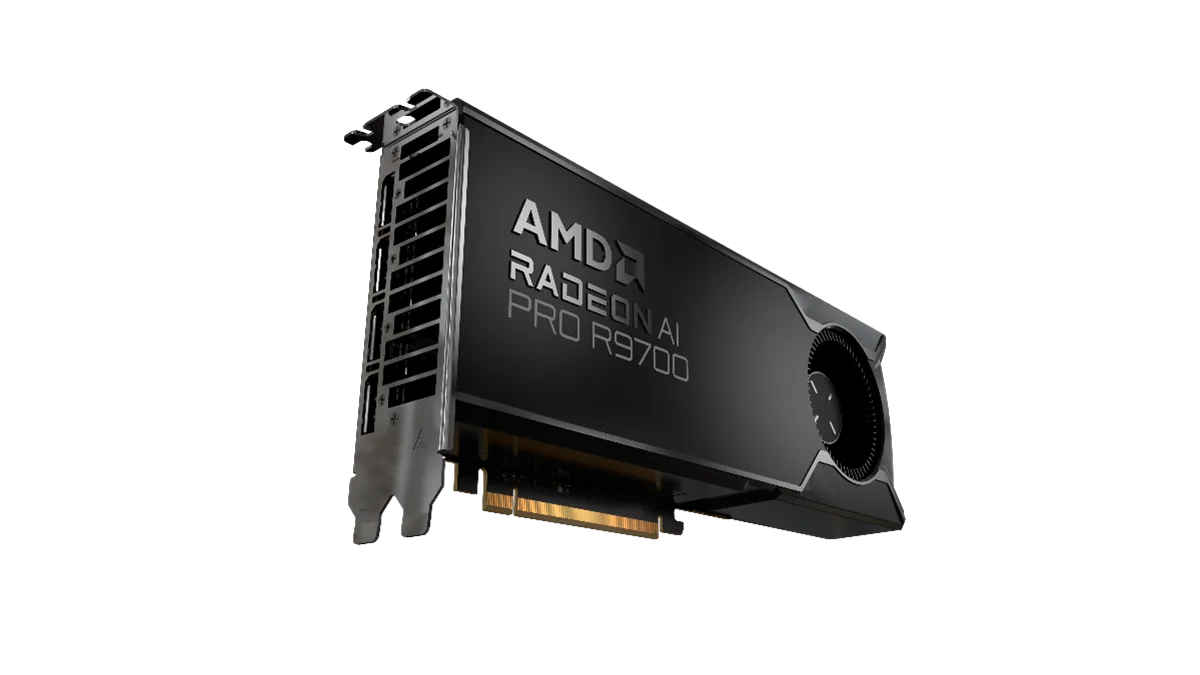
PowerColor
PowerColor AMD Radeon AI PRO R9700 32GB
- 32 GB
- AMD RDNA 4 (Navi 48)
Runs up to 30–34B at 4-bit
Check that your tools support ROCm on your operating system before buying. PyTorch and llama.cpp do; some niche tools still assume CUDA.
£1,089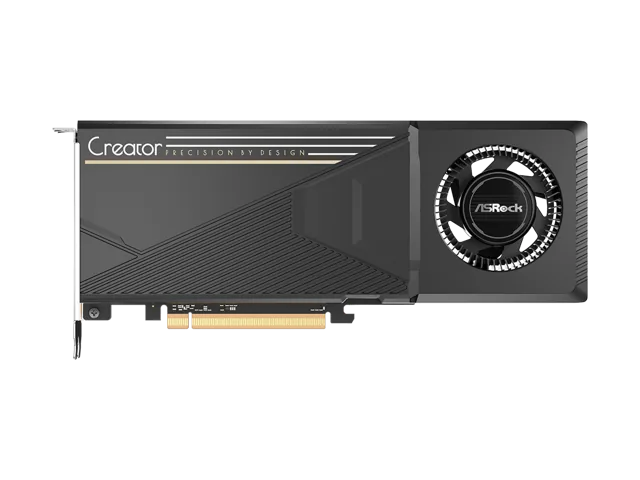
ASRock
ASRock Intel Arc Pro B60 Creator 24GB
- 24 GB
- Intel Xe2 (Battlemage)
Runs up to 30–34B at 4-bit
This is a single-GPU card with 24 GB. It uses a PCIe 5.0 slot wired at x8 and also works in PCIe 4.0 slots; check ASRock's spec sheet for the exact length and power connector before you order.
£499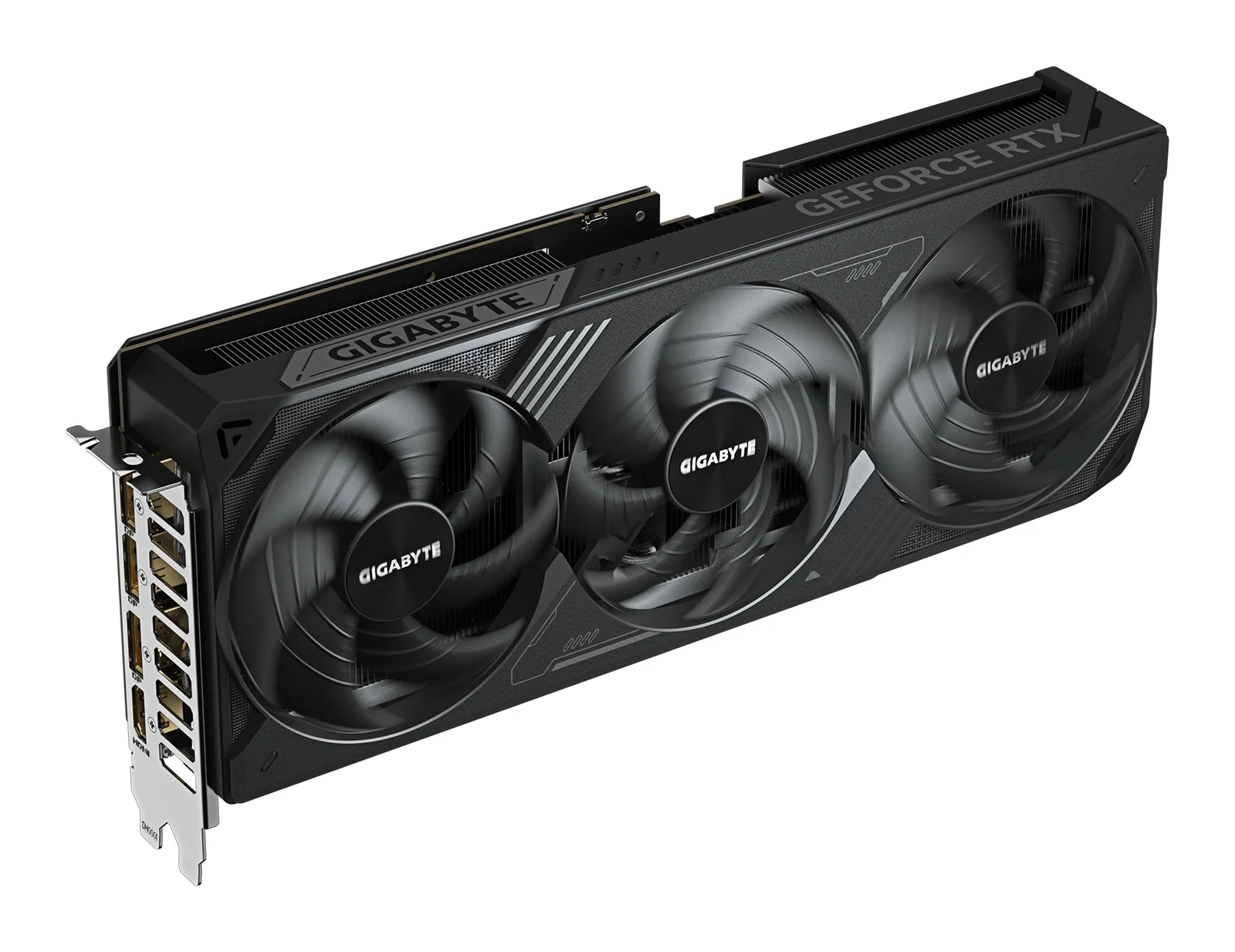
GIGABYTE
GIGABYTE GeForce RTX 5070 Ti WINDFORCE OC SFF 16G
- 16 GB
- NVIDIA GeForce RTX 5070 Ti (Blackwell)
Runs up to 13–14B at 4-bit
It needs one 16-pin power cable or the adapter in the box, which takes two 8-pin PCIe cables. GIGABYTE recommends a 750 W power supply.
£709