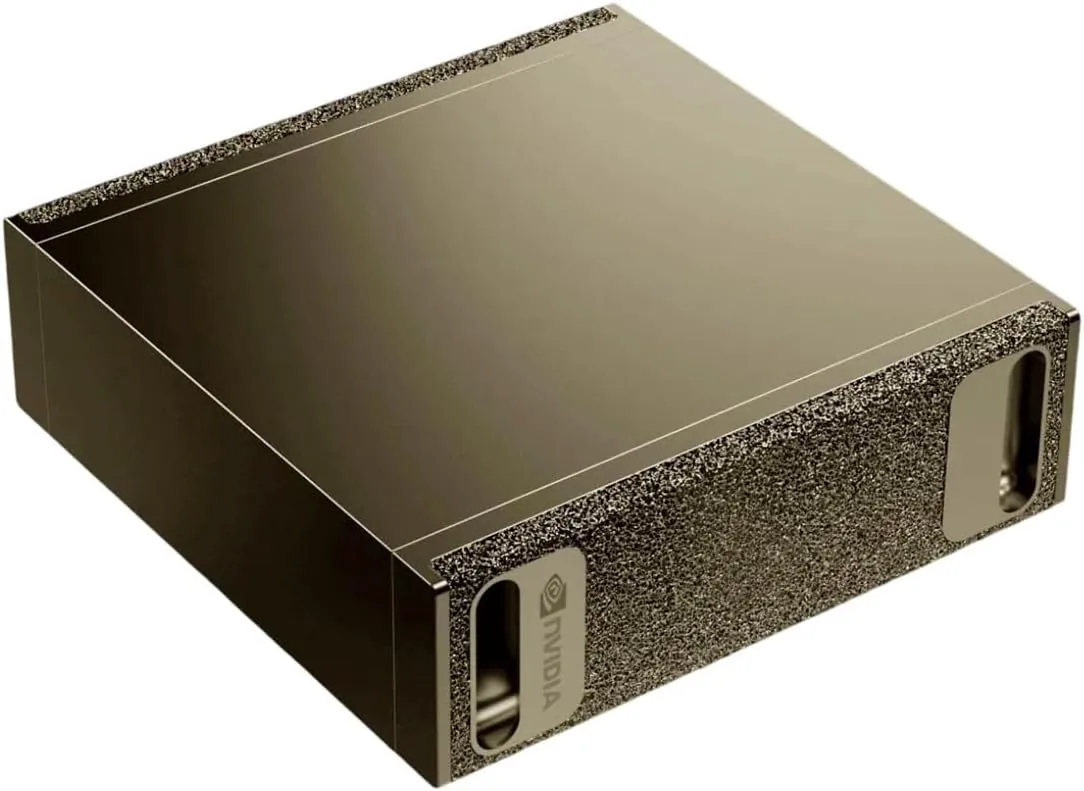
- DGX Spark128 GB unified memory
Full specifications
- Superchip
- NVIDIA GB10 Grace Blackwell
- CPU
- 20-core Arm (10 × Cortex-X925, 10 × Cortex-A725)
- GPU
- NVIDIA Blackwell, 5th-generation Tensor Cores
- AI performance
- Up to 1 petaFLOP FP4 (with sparsity)
- Memory
- 128 GB LPDDR5x coherent unified memory, 273 GB/s
- Storage
- 4 TB NVMe (NVIDIA Founders Edition; partner versions vary)
- Networking
- NVIDIA ConnectX-7 (200 Gb/s) and 10 Gigabit Ethernet
- Ports
- 4 × USB Type-C, 1 × HDMI 2.1a
- Operating system
- NVIDIA DGX OS (Ubuntu-based)
- Size
- 150 × 150 × 50.5 mm
- Weight
- 1.2 kg
- Power supply
- 240 W
Good for
- CUDA developers who prototype and fine-tune before moving to larger NVIDIA systems
- Running 70B to 120B-class models locally on a quiet desk machine
- Small clusters of two or four units over ConnectX-7
Not ideal for
- Fast chat with models under 30B: a 32 GB graphics card generates text faster
- Windows desktop use or x86-only software
- Gaming
NVIDIA
NVIDIA DGX Spark
The DGX Spark is NVIDIA's desktop AI computer, built on the GB10 Grace Blackwell superchip with 128 GB of coherent unified memory. It ships with NVIDIA's AI software stack, so code you write here moves to larger DGX systems and the cloud with little change. Two units can be linked over the built-in ConnectX-7 networking.
£3,929Charged in euros at checkout: €4,699. Import duties and taxes included.In stock. Dispatched in 1 to 3 business days.
- 30-day returns
- Free shipping over €199, charged in euros
- Ships from our UK warehouse
- Import duties and taxes included
- Shipping, returns and warranty
What it can run
Up to 120B+ at 4-bit, 70B at 8-bit (approximate)
Based on 128 GB of unified memory, about 75% of which the GPU can use. See every machine by model size
Guides for this product
Local AI · 4 min read
DGX Spark vs Mac Studio: Who the Spark Is For
Is the DGX Spark worth it? What it does well, where it is slower, and how it compares with a Mac Studio, an RTX 5090 and an RTX PRO 6000 for local AI.
Read the guide →Local AI · 5 min read
Mac vs NVIDIA vs Ryzen AI Max+ for Local AI
Which platform fits which work: CUDA on NVIDIA, unified memory on a Mac, or 128 GB on a Ryzen AI Max+ mini PC. Memory, software and trade-offs.
Read the guide →About the NVIDIA DGX Spark
The NVIDIA DGX Spark is a 150 mm square desktop built on the GB10 Grace Blackwell superchip, with 128 GB of coherent unified memory and NVIDIA's AI software stack preinstalled on DGX OS. NVIDIA rates it for models up to 200 billion parameters. Buy it if you develop, fine-tune or test models on CUDA and want the same software you will later run on larger NVIDIA systems.
Key features
- NVIDIA GB10 Grace Blackwell superchip: 20-core Arm CPU and Blackwell GPU
- 128 GB LPDDR5x coherent unified memory, 256-bit, 273 GB/s
- Up to 1 petaFLOP of FP4 AI performance (with sparsity)
- ConnectX-7 networking at 200 Gb/s for linking up to four units, plus 10 Gigabit Ethernet
- Up to 4 TB self-encrypting NVMe storage
- DGX OS (Ubuntu-based) with CUDA and NVIDIA AI tools
- 150 × 150 × 50.5 mm, 1.2 kg, 240 W power supply
What it runs
With about 75% of the 128 GB pool counted as usable for models, the DGX Spark covers 70B models at 8-bit and 120B-class models at 4-bit. A 120B model at 8-bit needs around 140 GB and does not fit on one unit. NVIDIA quotes models up to 200 billion parameters for one system; our rule keeps more room for context, so we put the practical ceiling at the 120B class. See how other machines compare in our model fit tool.
| Model size | 4-bit | 8-bit |
|---|---|---|
| 7–8B | Fits | Fits |
| 13–14B | Fits | Fits |
| 30–34B | Fits | Fits |
| 70B | Fits | Fits |
| 120B+ | Fits | Does not fit |
Performance in context
Memory bandwidth is 273 GB/s, well below a high-end graphics card. A dense model that fits on a 32 GB card will generate text faster on that card. The DGX Spark makes sense when the model is too large for one card, when you fine-tune rather than only run models, or when the CUDA stack itself is the requirement. Our DGX Spark guide explains who it suits and when to skip it.
Linking units
Each unit has two QSFP ports on the ConnectX-7 network card, each up to 200 Gb/s. Two or three units connect with a single direct QSFP cable; four units need a 200 GbE switch. NVIDIA recommends a power-of-two count for the best load balance, so two or four units rather than three.
Ports
- 4 × USB Type-C, with up to three DisplayPort outputs over USB-C
- 1 × HDMI 2.1a with multichannel audio
- 1 × 10 Gigabit Ethernet (RJ-45)
- 2 × QSFP (ConnectX-7, 200 Gb/s)
- Wi-Fi 7 and Bluetooth 5.4
Power and noise
The GB10 chip has a 140 W thermal design power and the system runs from a 240 W supply. NVIDIA declares a sound pressure of 29 dB at the operator position under load and 13 dB at idle, so it suits a desk.
Software
DGX OS is a Linux distribution based on Ubuntu and matches the system on NVIDIA's larger DGX machines. Out of the box you get CUDA and access to NVIDIA's catalogue of containers, including NeMo for fine-tuning, RAPIDS for data science, NIM inference services, PyTorch and Jupyter. The CPU is Arm, so x86-only Windows or Linux software will not run natively. Hardware support comes from the vendor that sold the system.
What to pair it with
One of the approved QSFP cables if you plan a second unit, and a 10 Gigabit network for moving datasets. If you want 128 GB of unified memory with x86 and Windows support, compare the Beelink GTR9 Pro; if you want the fastest single card for models up to 30B, the RTX 5090 is quicker.
Good for
- CUDA developers who prototype and fine-tune before moving to larger NVIDIA systems
- Running 70B to 120B-class models locally on a quiet desk machine
- Small clusters of two or four units over ConnectX-7
Not ideal for
- Fast chat with models under 30B: a 32 GB graphics card generates text faster
- Windows desktop use or x86-only software
- Gaming
Its memory bandwidth (273 GB/s) is lower than a high-end graphics card's, so large dense models generate text more slowly than they would on an RTX 5090. Its strengths are capacity and the CUDA software stack.
Who it's for
Developers who prototype, fine-tune and test models on CUDA before moving them to bigger hardware.
Full specifications
- Superchip
- NVIDIA GB10 Grace Blackwell
- CPU
- 20-core Arm (10 × Cortex-X925, 10 × Cortex-A725)
- GPU
- NVIDIA Blackwell, 5th-generation Tensor Cores
- AI performance
- Up to 1 petaFLOP FP4 (with sparsity)
- Memory
- 128 GB LPDDR5x coherent unified memory, 273 GB/s
- Storage
- 4 TB NVMe (NVIDIA Founders Edition; partner versions vary)
- Networking
- NVIDIA ConnectX-7 (200 Gb/s) and 10 Gigabit Ethernet
- Ports
- 4 × USB Type-C, 1 × HDMI 2.1a
- Operating system
- NVIDIA DGX OS (Ubuntu-based)
- Size
- 150 × 150 × 50.5 mm
- Weight
- 1.2 kg
- Power supply
- 240 W
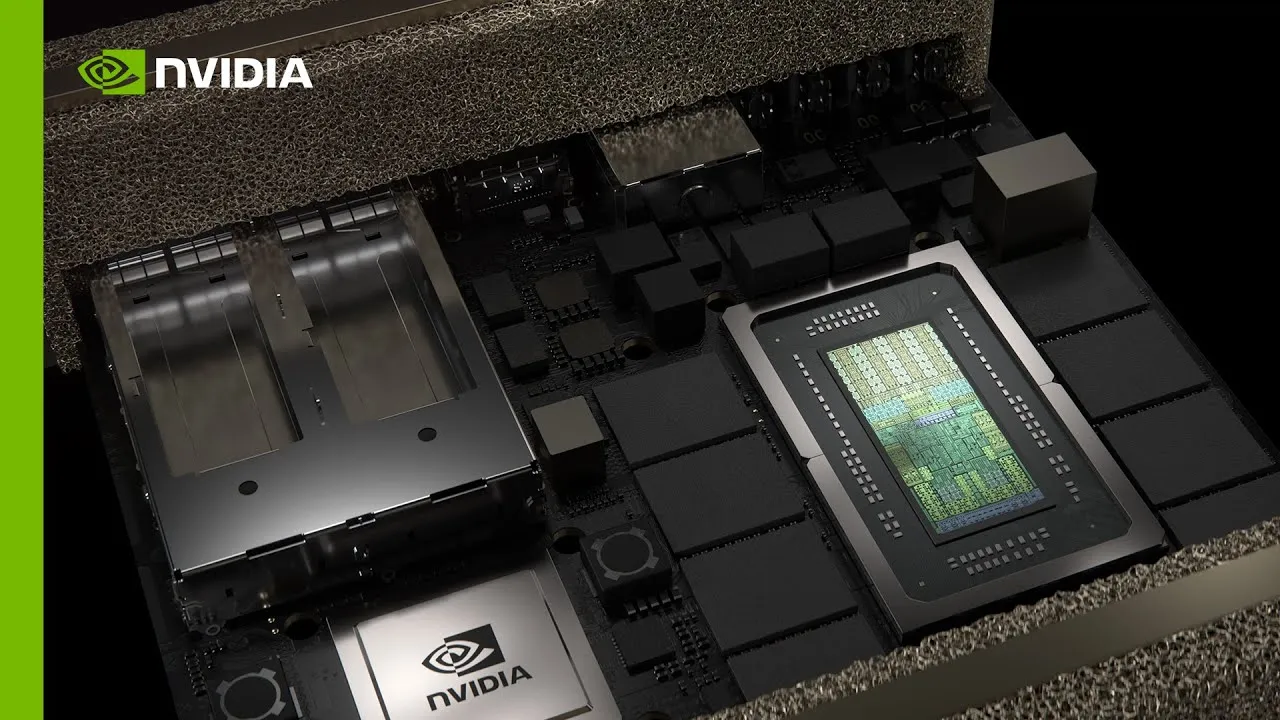
Watch it in action
Official videos from the manufacturer's own channel. They load only when you press play.

Reviews
What reviewers say
StorageReview
Praised the ready-made, NVIDIA-tested software stack and 128 GB of unified memory in a 240 W box, and how little setup it needs before real work starts.
Read the review
Atomrig customer reviews
No customer reviews yet. Bought this from us? Tell us how it runs.
Related products
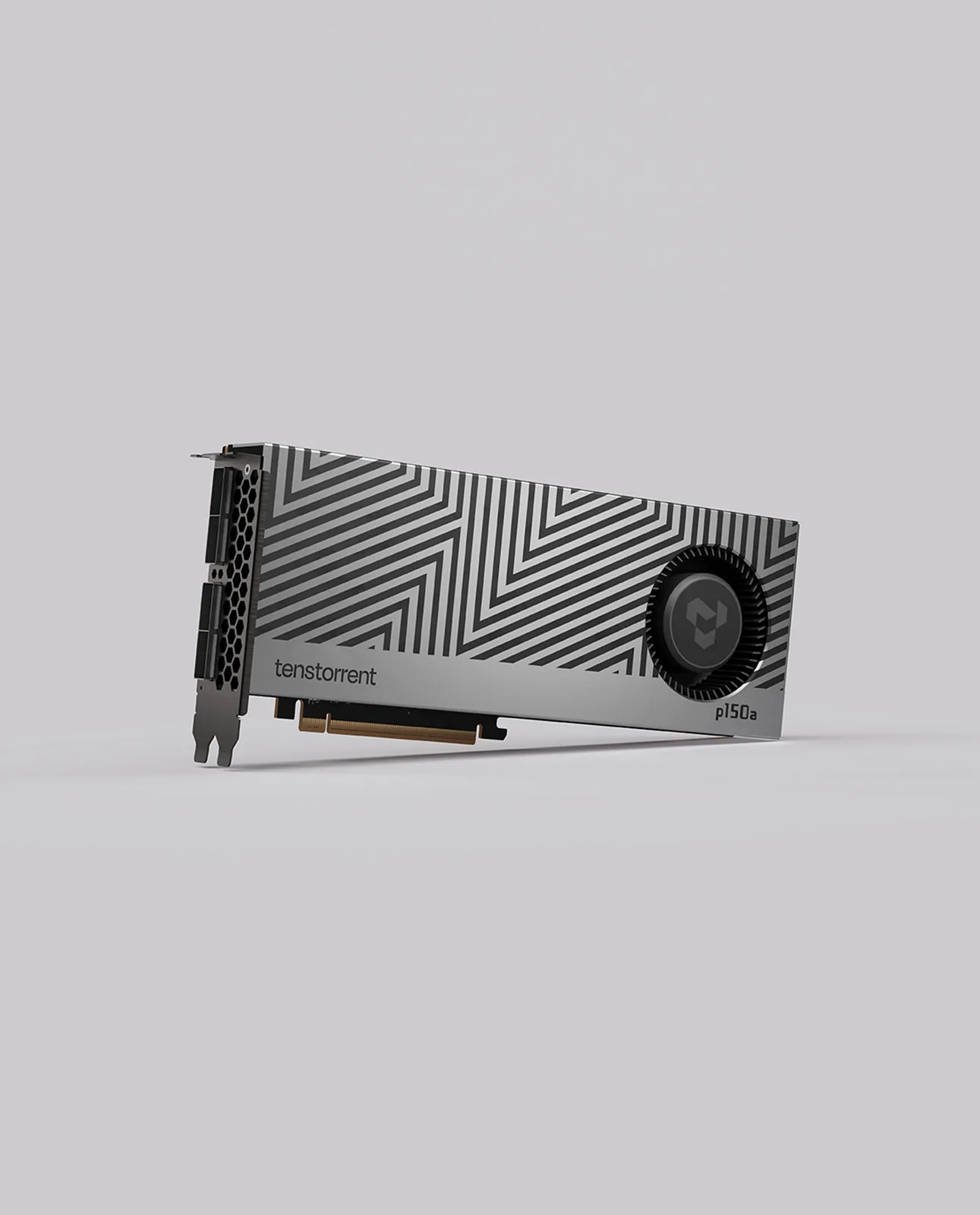
Tenstorrent
Tenstorrent Blackhole p150a
Runs up to 30–34B at 4-bit
- 32 GB
- Tenstorrent Blackhole
This is not a CUDA card. Check that the models you need are supported in Tenstorrent's open-source model library before you buy.
£1,169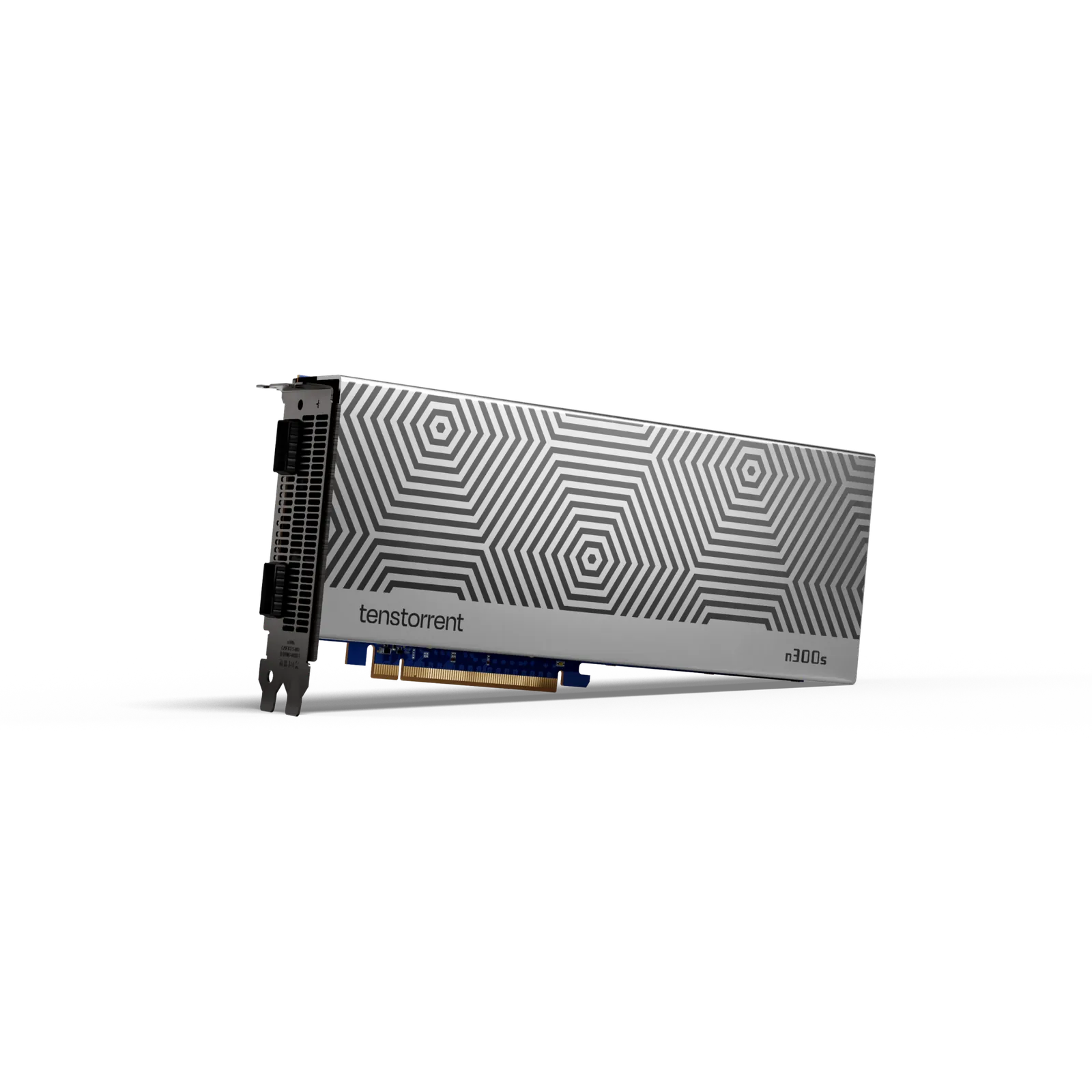
Tenstorrent
Tenstorrent Wormhole n300s
Runs up to 30–34B at 4-bit
- 24 GB
The 24 GB is split across two chips (12 GB each), so larger models have to be spread across both. Check that the model you want has a working multi-chip version.
£1,169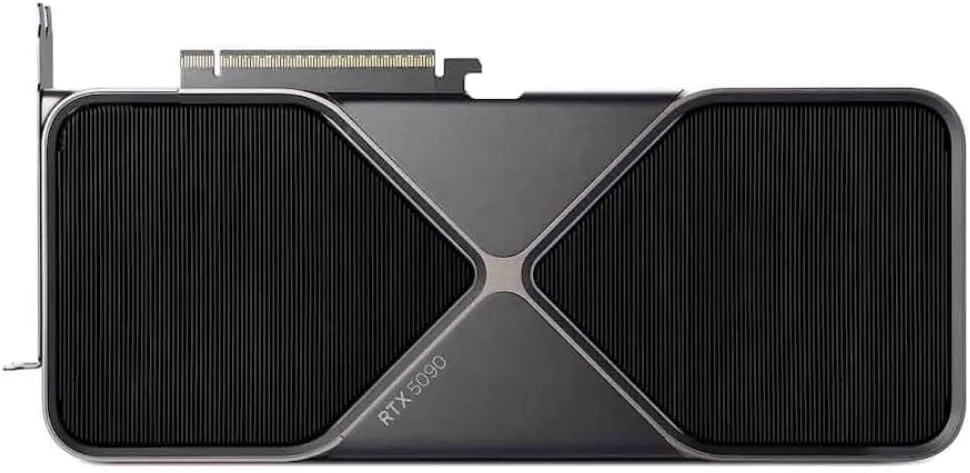
NVIDIA
NVIDIA GeForce RTX 5090
Runs up to 30–34B at 4-bit
- 32 GB
- NVIDIA Blackwell (GB202)
32 GB runs 30B-class models comfortably at 4-bit, but a 70B model will not fit on one card. For 70B, plan for two cards or a large unified-memory system.
£1,669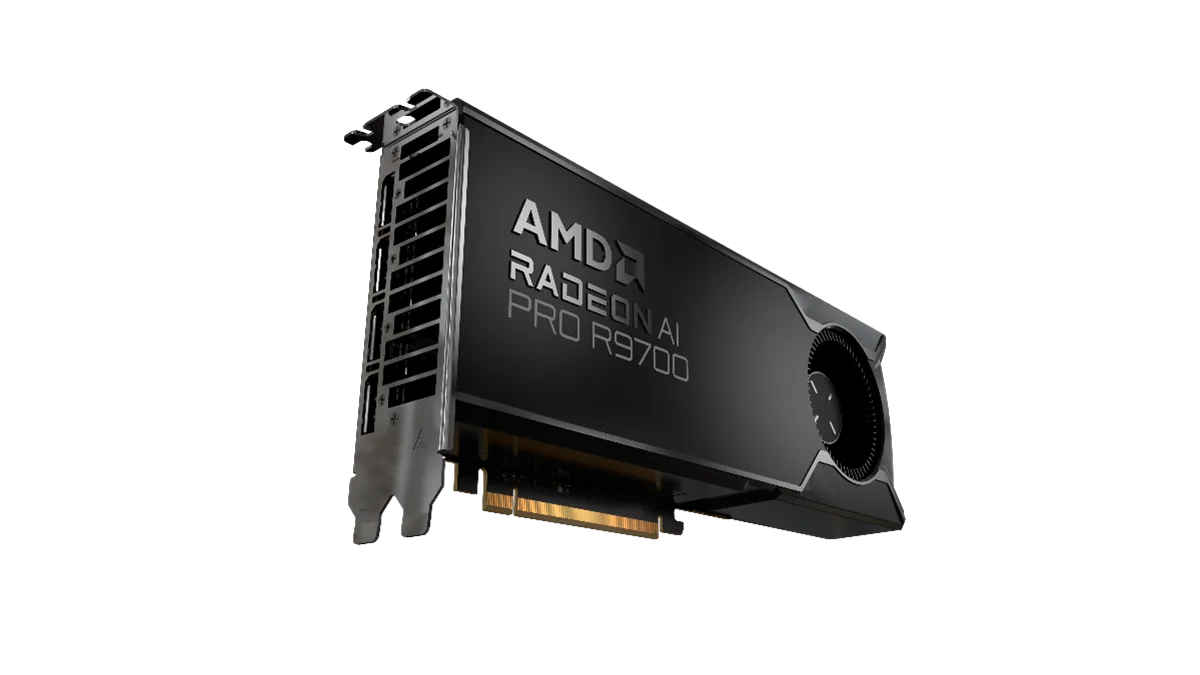
PowerColor
PowerColor AMD Radeon AI PRO R9700 32GB
Runs up to 30–34B at 4-bit
- 32 GB
- AMD RDNA 4 (Navi 48)
Check that your tools support ROCm on your operating system before buying. PyTorch and llama.cpp do; some niche tools still assume CUDA.
£1,089